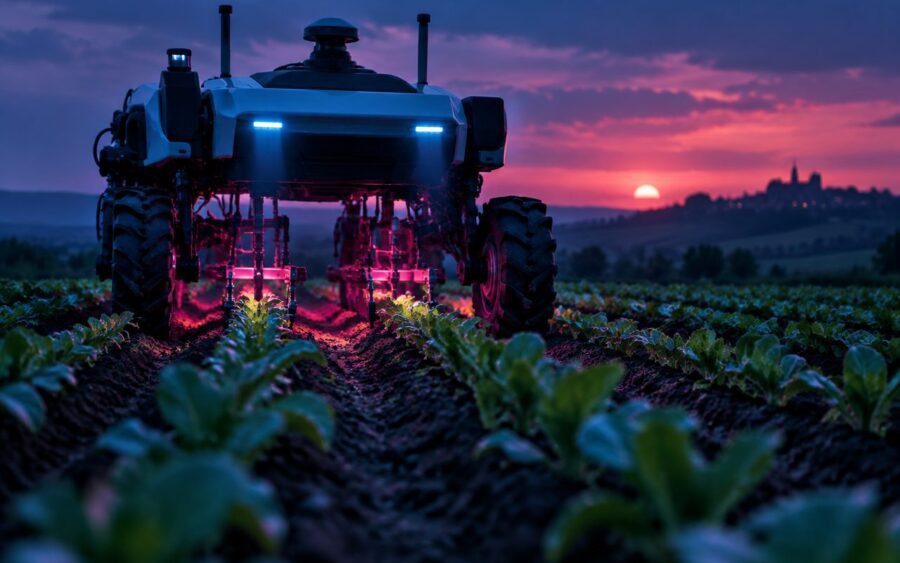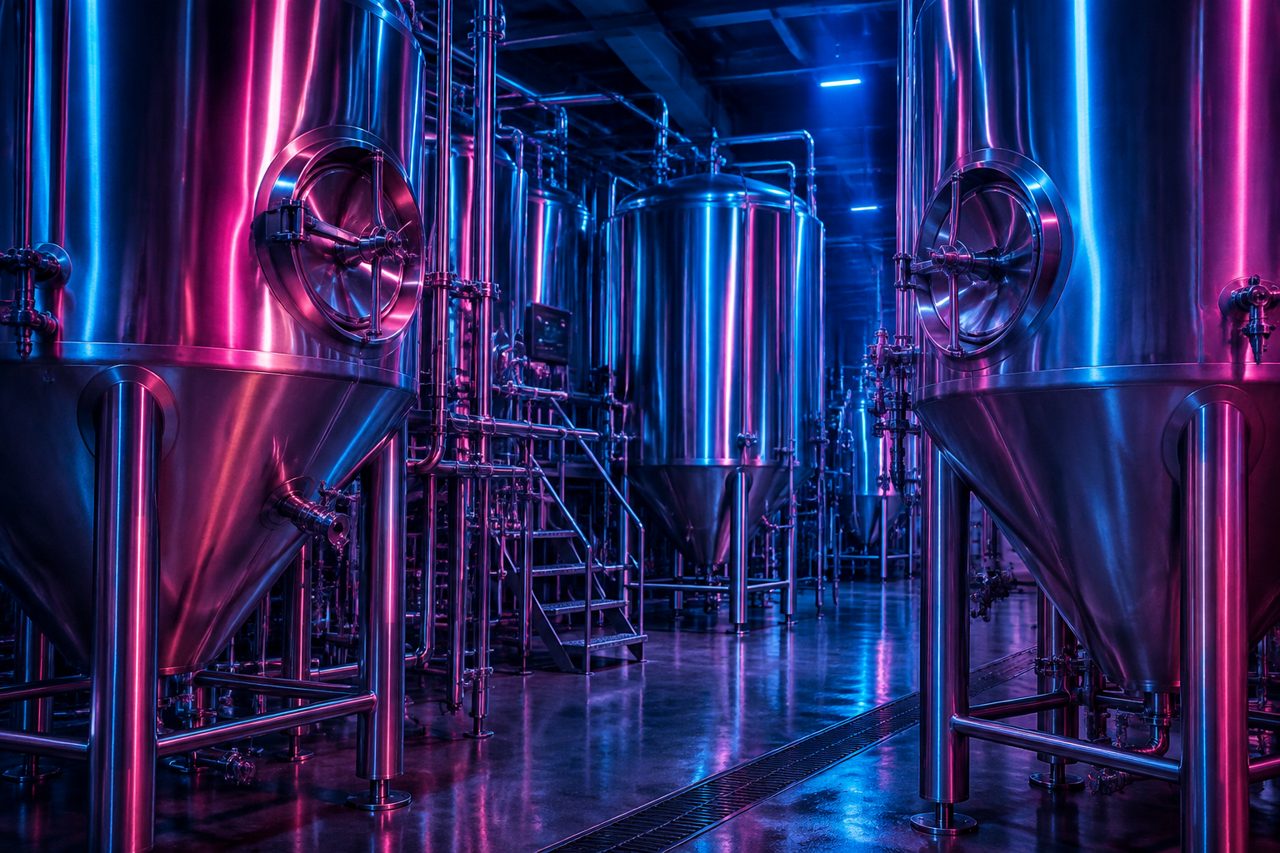
Inside a tank, microorganisms turn sugar into milk proteins, egg proteins or specialty ingredients. On paper, the promise is spectacular: producing certain animal-derived molecules without raising the animal. But between a laboratory demonstration and powder shipped by the pallet, everything changes. Feeding, oxygenation, cooling, separation, cleaning and persuasion all become essential. Precision fermentation is not just about what happens in a yeast genome: it is about what happens in a factory’s pipes.
A revolution borrowing from established industries
The principle is not new. Selected or genetically modified microorganisms have long been used to make enzymes, vitamins and medicines. Fermentation-produced chymosin, used to curdle milk, is a major precedent in food production. What is new is primarily the ambition: moving from active ingredients used in small doses to proteins consumed in substantial quantities.
This approach must be distinguished from traditional fermentation, which transforms a food, and biomass fermentation, in which the microorganisms themselves are primarily what is consumed. Here, they serve as biological factories to manufacture a target molecule. That molecule must then be recovered at a level of purity appropriate to its use.
Perfect Day, for example, has developed whey proteins produced through fermentation; other businesses, such as The EVERY Company, are working on egg proteins. These developments were already documented before 2025. Looking ahead to September 2026 requires separating these achievements from future prospects: their existence demonstrates neither broad-based cost competitiveness nor mass adoption. It is precisely this transition that remains to be examined.
A large tank is not just a scaled-up laboratory
In the laboratory, a high-performing strain can deliver an attractive yield. In an industrial tank, oxygen and nutrients are distributed less evenly. Agitation consumes electricity, can create mechanical stress and does not solve everything. The heat generated by microorganisms must also be removed. A biological recipe becomes an engineering problem.
Three parameters matter particularly: the final protein concentration, the production rate and the quantity obtained per unit of feedstock. A strain that excels on just one measure may still perform poorly economically. Producing quickly, but in a very dilute broth, means moving and then treating large amounts of water to recover very little product.
Strain stability and the risk of contamination add further complications. A lost batch ties up expensive equipment, wastes inputs and delays deliveries. The industry therefore needs repeatable performance more than a one-off record. The decisive figure is not simply what the tank produces: it is what the factory can sell after all losses.
Purification, the quiet arbiter
What comes out of the fermenter is generally not a protein ready for packaging. The broth contains cells, salts, residual nutrients and various compounds generated by metabolism. How straightforward recovery is at the outset depends on whether the protein is secreted or remains inside the cells. Centrifugation, filtration and sometimes more selective separation steps then come into play.
Each operation costs money and can result in product losses. Membranes become fouled, equipment needs cleaning and drying requires energy. A protein that is cheap to produce biologically can become expensive to isolate. The challenge grows when the application demands high purity, a neutral color or the absence of off-flavors.
Maximum purity is not always the right goal, however. A preparation intended for a biscuit does not face the same constraints as an ingredient for a clear beverage. Designing the strain, the process and the final food simultaneously can avoid unnecessary refinement, provided food safety requirements are met and the composition of the product being sold is kept under control.
Energy and sugar: the balance depends on location
Taking the animal out of the equation does not eliminate either agricultural land use or emissions. Microorganisms need a carbon source, often derived from sugar or starch crops, as well as nitrogen and minerals. The environmental benefits depend on these supplies, the actual yield and the food against which the protein is being compared.
Electricity powers agitation, aeration and cooling, among other operations. Heat is used in preparing growth media, maintaining process hygiene and certain finishing operations. A factory supplied with low-carbon energy and able to recover heat starts with an advantage. But clean energy is not necessarily cheap, continuously available or accessible in the right place.
Life cycle assessments must therefore be read alongside their assumptions. An optimized industrial scenario does not automatically describe a first factory. Comparing a kilogram of powder with a kilogram of liquid milk would also be misleading: protein content, food function and the chosen assessment boundaries must be taken into account.
Financing a factory, not just a promise
Available fermentation capacity is not all interchangeable. A facility may be suitable for an enzyme but not for a food protein requiring different volumes, separation equipment or safeguards against cross-contamination. Outsourcing reduces the initial investment; it guarantees neither competitive costs nor a lasting production slot.
Building a dedicated site allows greater optimization, at the cost of a substantial financial commitment. Customers must then be secured before a full industrial track record is available. Looking ahead to 2026, the most credible scenario may be gradual progress through targeted markets: functional ingredients or higher-value specialty products before direct competition with the cheapest proteins. This is not a guaranteed outcome, but an economic rationale.
Approval and acceptance: two different doors
Market access varies by jurisdiction. In the United States, some ingredients have followed pathways based on GRAS status, with notifications reviewed by the FDA. A no-objection letter does not amount to universal approval of the technology. In the European Union, novel foods are subject, among other requirements, to a safety assessment and authorization when the novel food framework applies.
Safety is assessed on the basis of the product and its production process: the production organism, undesirable substances, composition, exposure and allergenicity. A dairy protein produced without a cow can still be allergenic to someone allergic to milk proteins. “Animal-free” therefore does not mean “allergen-free.” Labeling must make this distinction clear.
Acceptance will also be decided on store shelves. Consumers buy taste, texture, price and trust, not fermentation yields. Brands will need to explain where their ingredients come from without disguising them as traditional agricultural products. For a manufacturer, the best evidence will remain tangible: a consistent, traceable, available protein that performs its function in a recipe.
What next? Looking ahead to September 2026, the relevant question is not whether livestock farming will disappear, but which applications allow this technology to deliver on all its promises simultaneously. The signals to watch will be repeat orders, the performance of operating factories, approvals secured and transparent environmental assessments. Precision fermentation could find a lasting place in the food system; that place will be earned as much through resource-efficient processing as through biological ingenuity.