
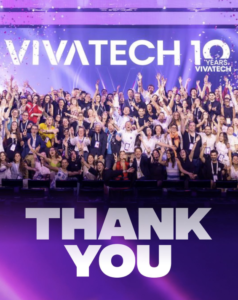


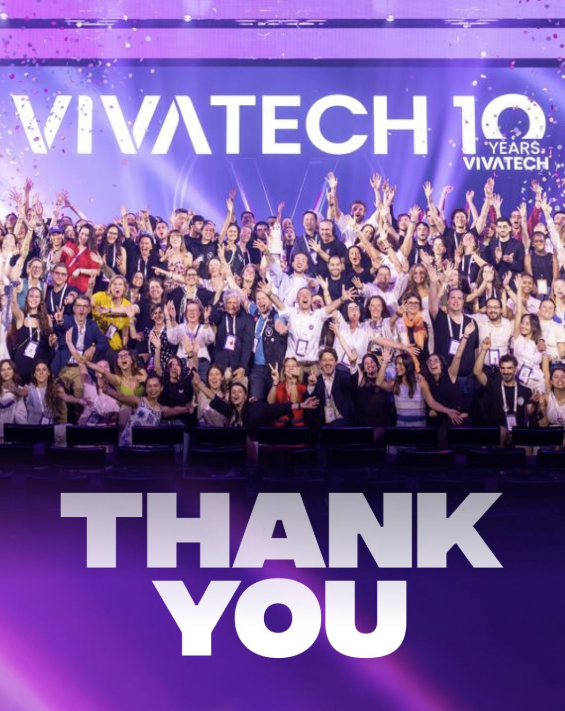
VivaTech is no longer just a technology event in Paris. Ten editions after its launch, it has become one of the most important meeting points for startups, investors, global companies, policymakers and innovation leaders in Europe.
From June 17 to 20, 2026, VivaTech returns to Paris Expo Porte de Versailles for its 10th edition. The anniversary is more than symbolic. It marks the transformation of VivaTech from a bold French initiative into a global platform for business, technology and influence.
In 2016, VivaTech entered an already crowded landscape of international innovation events. Europe had strong startups, strong engineers and strong research institutions, but it lacked a flagship event capable of bringing the whole ecosystem together at scale. Ten years later, the event has become a central stage for European technology.
The 2026 edition is expected to confirm this new dimension. VivaTech has announced 15,000 startups, 4,000 investors and a strong focus on artificial intelligence, deeptech, cybersecurity and energy. Germany is also named Country of the Year, with the largest delegation in the event’s history. That choice is important. It signals that VivaTech is no longer only about French innovation. It is increasingly about Europe’s ability to build a common technological agenda.
The numbers tell part of the story. VivaTech 2025 already reached record levels, with 180,000 visitors, more than 14,000 startups and 171 nationalities represented. The event has become a place where entrepreneurs can meet investors, major corporations can identify new partners, and governments can showcase their digital ambitions. But the deeper story is not just about attendance. It is about the role VivaTech now plays in the European tech ecosystem.
Over the past decade, technology has moved from the margins of business strategy to the center of economic power. Artificial intelligence, cloud infrastructure, cybersecurity, data, energy transition, mobility, healthtech and digital sovereignty are no longer niche topics. They are strategic issues for companies and governments. VivaTech has grown because the importance of these subjects has grown.
The 10th edition arrives at a particularly important moment. The global technology race is becoming more intense. The United States continues to dominate platforms, venture capital, cloud and AI infrastructure. China is building technological power with industrial coordination and scale. Europe has talent, research, regulation and strong industrial sectors, but it still needs to turn innovation into global champions.
This is why VivaTech matters. It gives Europe a visible stage. It allows founders, investors, public institutions and large companies to meet in the same place. It creates momentum around new technologies and helps shape the narrative of European innovation. But it also creates pressure. Europe cannot simply celebrate innovation. It must prove that it can scale it.
Artificial intelligence will be one of the major themes of this anniversary edition. The conversation has changed dramatically since the early years of VivaTech. AI is no longer presented as a futuristic promise. It is now embedded in productivity tools, enterprise software, public services, cybersecurity, marketing, finance and industrial systems. For startups, AI creates new opportunities. For large companies, it creates a transformation challenge. For governments, it raises questions of sovereignty, ethics and competitiveness.
Deeptech is another key area. Europe has strong scientific assets, but too many deeptech companies struggle to move from laboratory to market. Events like VivaTech can help bridge that gap by connecting researchers, entrepreneurs, investors and corporate partners. The question is whether this visibility can translate into real financing, industrial partnerships and international growth.
The presence of Germany as Country of the Year also gives the 2026 edition a stronger industrial dimension. France has built a powerful startup scene and strong visibility in AI. Germany brings engineering depth, manufacturing strength and industrial discipline. Together, the two countries can represent a more serious European technology strategy — one that connects software, hardware, energy, industry and capital.
VivaTech’s next challenge is to avoid becoming only a showcase. Large events can easily become places of slogans, panels and polished demos. But the real value of VivaTech will be measured by what happens after the event: partnerships signed, startups funded, pilots launched, products adopted and companies scaled.
That is the real meaning of this 10th edition. VivaTech is not just celebrating the past. It is asking what Europe wants to become in the next decade of technology.
The first ten years were about visibility, ecosystem building and global recognition. The next ten years will have to be about execution. Europe needs more capital, more infrastructure, more industrial partnerships, more AI capacity and more companies capable of competing internationally.
VivaTech has become Europe’s biggest tech stage. Now the question is whether Europe can use that stage to build real technological power.


