



Luxembourg has never tried to compete with Paris, Berlin or London by size. That would be the wrong game. Its strength has always been different: connectivity, finance, regulation, international networks and the ability to bring decision-makers into the same room.
That is exactly why Nexus Luxembourg 2026 deserves attention.
Returning on June 10 and 11, 2026, at Luxexpo The Box, Nexus Luxembourg is positioning itself as the Grand Duchy’s flagship AI and technology summit. But the event is more interesting than a simple tech conference. It reflects a broader ambition: to make Luxembourg a serious European meeting point for artificial intelligence, finance, startups, investors and policymakers.
The timing is important. Europe is in the middle of a technological identity crisis. It wants artificial intelligence, but also regulation. It wants innovation, but also sovereignty. It wants startups, but also industrial scale. It wants to compete with the United States and China, but often lacks the speed, capital and infrastructure of both. In this context, smaller countries can play an outsized role if they know how to position themselves.
Luxembourg’s opportunity is not to become another Silicon Valley. Its opportunity is to become a trusted European connector.
Nexus Luxembourg 2026 seems designed around that idea. The event is presented as a curated “4-in-1” experience, bringing together tech leaders, startups, scaleups, investors, financial-centre executives, EU policymakers and international experts. That mix is important. Many tech events are good at attracting startup founders. Others attract corporates. Some focus on policymakers. Nexus is trying to place these communities in the same ecosystem.
This is where Luxembourg has a real card to play. The country already has a strong financial centre, a multilingual business culture, proximity to European institutions and a reputation for stability. In the age of AI, those assets matter. Artificial intelligence is not only about models and applications. It is also about trust, data governance, cybersecurity, compliance, investment and cross-border deployment.
That makes Nexus particularly relevant for fintech, enterprise AI, cybersecurity, digital infrastructure and regulated innovation. These are not just fashionable topics. They are areas where Europe needs credible solutions. Banks need AI, but they cannot deploy it recklessly. Governments need digital tools, but they need sovereignty and security. Startups need capital, but also access to customers and regulatory understanding. Investors need opportunities, but also serious ecosystems.
The startup dimension is one of the most strategic parts of Nexus Luxembourg. The 2026 edition is expected to bring together hundreds of startups and scaleups, with selected companies competing for a major prize. That matters because startup visibility is no longer enough. In the current market, founders need customers, investors, partnerships and credibility. A stage is useful only if it opens doors.
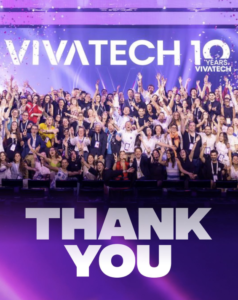
For Luxembourg, the event is also a branding tool. Countries now compete for entrepreneurs, engineers, investors and technology companies. A strong tech summit can help shape perception. VivaTech does this for France. Web Summit did it for Lisbon. Slush did it for Helsinki. Nexus is Luxembourg’s attempt to build its own recognizable platform.
But the comparison should not be exaggerated. Nexus does not need to become gigantic to matter. In fact, its advantage may be the opposite. A smaller, curated event can create better conversations than a massive trade show. If Nexus can keep a high-quality audience of founders, investors, policymakers and business leaders, it can become valuable precisely because it is concentrated.
The real question is execution. Can Nexus convert attention into deals? Can it help startups raise money, sign pilots and enter new markets? Can it attract international investors without losing its Luxembourg identity? Can it connect AI and finance in a way that creates real products rather than conference slogans?
This is the challenge for all European tech events. The continent has no shortage of panels, keynotes and innovation speeches. What it needs is scale, capital, infrastructure and commercial outcomes. Nexus Luxembourg will be judged not only by attendance numbers, but by what happens after the event: partnerships signed, startups funded, clients won and projects launched.
Still, the momentum is real. In only a few editions, Nexus has managed to become one of the more visible tech gatherings in Europe’s AI calendar. That is not accidental. It fits a larger European need: a place where technology, finance and policy can meet without pretending they are separate worlds.
That may be Luxembourg’s real advantage. It understands that innovation is not only about invention. It is about coordination. It is about building bridges between capital, regulation, technology and markets.
Nexus Luxembourg 2026 is therefore more than an event to watch. It is a signal. A signal that smaller European countries can shape the tech agenda if they focus on the right intersections. And Luxembourg’s intersection is clear: AI, finance, trust, startups and European connectivity.
In a fragmented European tech landscape, that positioning could become powerful.


