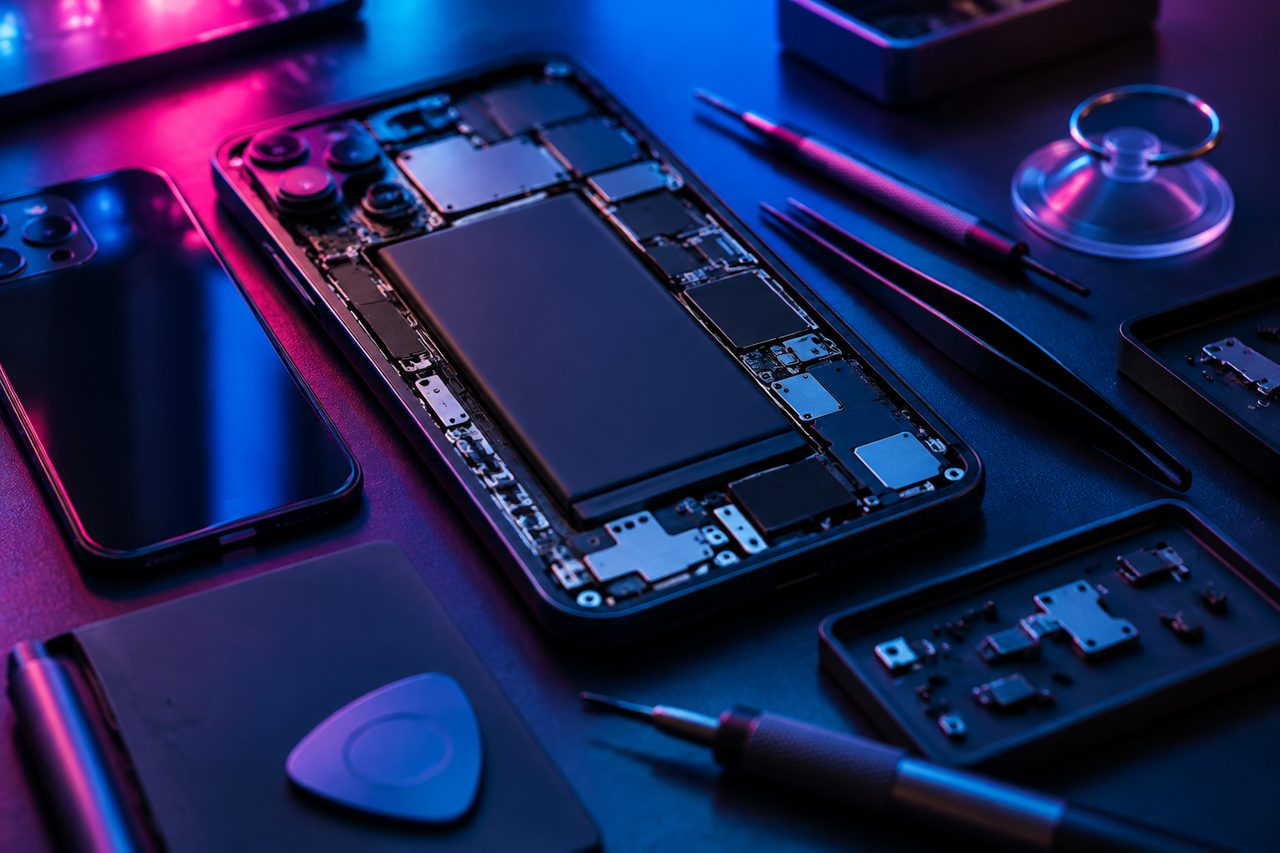
A phone is dropped, its battery wears out, its screen cracks: does it really need replacing? Since June 20, 2025, the European Union has been trying to make that question less theoretical. New ecodesign requirements and an energy label give buyers comparable criteria beyond megapixel counts. In September 2026, the challenge is to understand their scope: this framework creates better conditions for a longer lifespan, but does not turn every smartphone into an easily dismantled device.
Two regulations, two levers
The framework rests on two European regulations adopted in 2023. The first, covering ecodesign, sets minimum requirements for devices within its scope placed on the market from June 20, 2025. The second establishes energy labelling for smartphones and slate tablets. Their approaches are complementary: exclude some products that are not durable enough and make it possible to compare those that remain.
The date matters: these obligations do not retroactively upgrade every phone already sold. A device bought after June 2025 may also come from stock placed on the market earlier. The scope also includes exclusions, notably for certain devices with flexible main displays. Before comparing two models, buyers therefore need to check that both fall under the same framework.
A label that tells you more than processing power
Alongside the price, the European label introduces several pieces of information long scattered across specifications, reviews and marketing claims. It combines an energy efficiency rating, from A to G, with more directly useful indicators. A QR code links to the public European EPREL database, which contains the information declared for the model.
- Battery life per charge, measured using a standardised protocol.
- Battery longevity, expressed in cycles before capacity falls below a specified threshold.
- Resistance to repeated drops, assessed under defined conditions.
- Repairability, rated from A to E.
- Protection against dust and water, indicated by the IP rating.
These indicators answer different questions. Excellent energy efficiency does not necessarily mean the longest battery life: battery size also matters. Good drop resistance does not guarantee that a screen will survive an uneven pavement. The value lies elsewhere: having a common basis for comparison rather than comparing promises based on different methods.
Batteries: a minimum standard, not a promise of immortality
The key figure is concrete: batteries in smartphones covered by the rules must retain at least 80% of their initial capacity after 800 charge cycles. A cycle corresponds to a cumulative amount of energy equivalent to one full charge, not necessarily one charging session. Two charging sessions each replenishing half the battery’s capacity amount to roughly one cycle.
This minimum provides a benchmark for assessing longevity. It does not, however, allow anyone to promise a precise lifespan in years. Heat, heavy use, charging habits and calendar ageing influence actual degradation. A device used daily for navigation in a hot car will not age in the same way as a phone under less strain.
Another essential distinction: the June 2025 rules do not universally require batteries to be removable without tools. They regulate design, replacement and access to parts, with technical provisions and exceptions. The European Batteries Regulation sets another milestone in 2027 for battery removal and replacement, also subject to conditions. Confusing these deadlines would suggest an immediate return to clip-off back covers.
Spare parts available, but to whom?
A replaceable battery is useless if a replacement cannot be found. The framework therefore requires essential spare parts to remain available for at least seven years after the model is no longer placed on the market. That reference point matters: the clock does not simply start on the day the model is unveiled. Deliveries must also meet specified deadlines, generally between five and ten working days depending on the period concerned.
But not everyone has access to the same parts. Some must be offered to end users, while others are made available to professional repairers. Repair information and the necessary software tools are also regulated. The aim is to limit situations in which a component exists, but only the manufacturer’s network can actually carry out the repair.
Price remains an issue. A screen available at a price close to the phone’s value makes repair legally possible but economically absurd. Publishing pricing information improves transparency without imposing a universal price cap. For buyers, the cost of a battery or screen therefore remains as important a criterion as the rating on display.
Software becomes part of the definition of durability
A smartphone’s hardware may be intact, yet the device can become frustrating to use because its software is no longer maintained. European requirements also regulate the availability of operating system updates, covering a period of at least five years after the model is no longer placed on the market. They include provisions on security, corrective and functionality updates.
However, it is important to distinguish between software support and a guarantee of receiving every new feature. This framework does not promise that every older model will get every feature introduced on its successor. When choosing a phone, it is better to look for an explicit policy, a support end date and a credible update delivery record than a vague pledge of “regular” updates.
A good rating is no substitute for a repair quote
The European repairability rating summarises several parameters: disassembly, fastenings, tools, parts, information and software-related factors. It makes manufacturing choices visible that were previously difficult to assess in a shop. But an aggregate indicator inevitably conceals differences: a model may be relatively easy to open while still containing a component that is particularly expensive to replace.
In practice, three checks are worthwhile: consult the EPREL product information sheet, look up the cost of common repairs and identify a repair shop able to do the work. For a refurbished purchase, add the battery’s actual condition and the warranty terms to the list. The label describes the model’s characteristics, not the wear and tear on the individual device being sold.
A framework that must work in practice
The industrial shift is substantial: durability is becoming a condition of market access and a basis for comparison. Its effectiveness will nevertheless depend on enforcement, the reliability of declarations and the actual availability of spare parts. The European repair directive, whose transposition deadline was July 31, 2026, provides a complementary lever; its practical implementation must be checked country by country.
What happens next? The next battle could shift towards the total cost of ownership: how much does a phone cost if it is kept for a long time, with its battery replaced and its software supported? That is a prospect, not yet a guaranteed outcome. If enforcement follows through and repairs remain affordable, European rules can change the decisions made by manufacturers and buyers alike. Real progress will mean being able to keep a device that still meets our needs, without its first breakdown making the decision for us.