Skip to content
Annuaire
Sections
Human

Games Over Us

Games Over Us
L’essentiel

Addressing the inhuman boredom in professional and educational settings by integrating gamification, challenge activities, and the psychological state of 'Flow' to enhance immersion and engagement.

À retenir

Addressing the inhuman boredom in professional and educational settings by integrating gamification, challenge activities, and the psychological state of 'Flow' to enhance immersion and engagement.

[vc_row][vc_column][vc_column_text]

[show-team ids=’17567′ url=’active_new’ layout=’grid’ style=’img-square,img-white-border,text-left,img-left,normal-float,card-theme’ display=’photo,freehtml,location,name’]

It becomes, in my opinion and precisely at the present time, inhuman that one undergoes in addition to daily stress, boredom!! Some will say that it is irrelevant, that there are moments that are necessarily boring and others that are less so! I agree! But what about boredom in the workplace?! Is that not counterproductive? Do we have to suffer just because we are paid? It’s even worse when working in a sector where boredom is likely to be viral and thus create total disinterestedness as in the case of teaching! Sometimes forcing students to do everything except take the course, Yes… yes I’m talking to you! You were doodling all over the place while your Prof was giving his all, or not!!

From “my boring course” to “the wonderful world of my course”

As with any incident, it is imperative to make a statement! What is difficult at this level is to realize that there was an incident. The teacher has concrete truths about the content of his course, but not on its form, so he must be aware of the immersion rate of his students in the global atmosphere during his sessions. For this, nothing is simpler than simply communicating with the students and especially listening to them, even if at first some will not dare to say that the course is a “killing” in the macabre sense of the term, it is the duty of the teacher to establish a dialogue based on trust and freedom to express oneself without using his authority.


The immersion

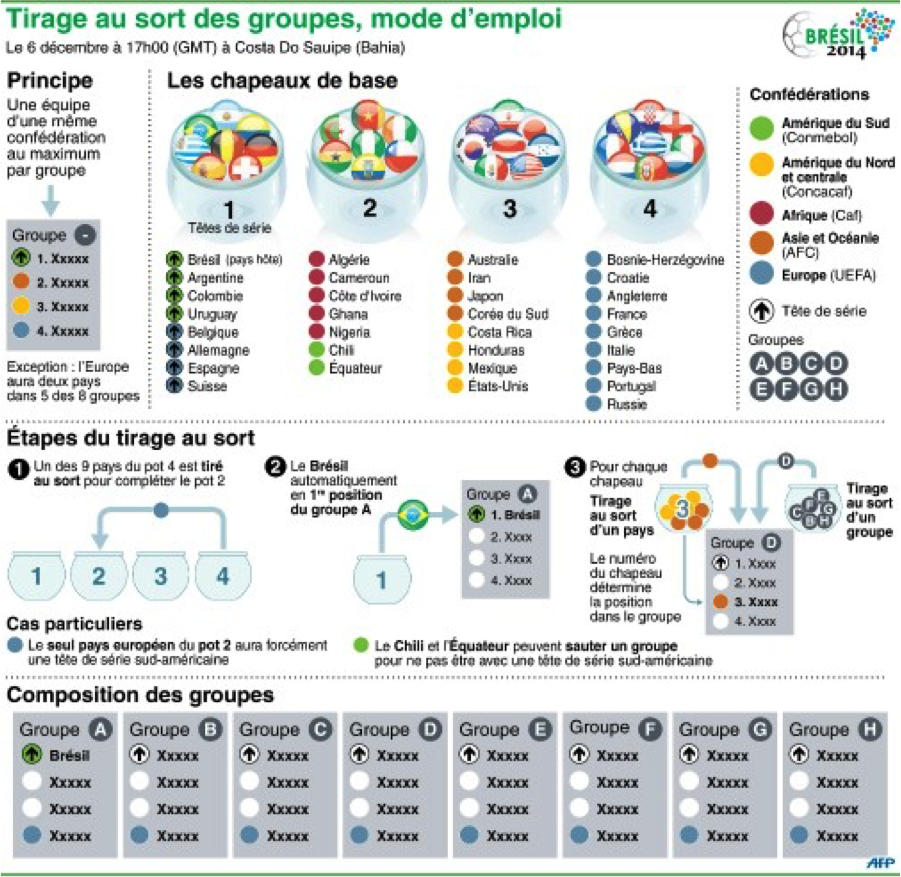
Once the observation is made, we will be able to act on the variables of boredom, it may be the teacher who is heavy, it may be the content of the course or its form of presentation. At this level, the imperative becomes to create or improve the immersion levers. This is to make changes not directly to the content of the course but to make it more soluble by the “Fun Factor”. Indeed, it is perfectly possible to gamify any content, whatever its nature, under the condition that the “Fun” part does not take over the main objective which is learning. The concrete solution at this level is to take back the materials of the course and to restructure them in such a way as to have for each session a “challenge” activity that stimulates the attention of the students, in sum, it is necessary to add playful elements to the courses by integrating rules, i.e. the main objective, the tools that can be used, what is mandatory, what is prohibited, the time limits for execution, etc. For example, before distribution of the themes of presentations or other research, one can go through the creation of working groups by choosing the members of each group randomly by drawing according to the criteria of FIFA (each member is assigned a Country at random) and the hats are drawn. We can also imagine work done in the context of duels between groups, the same theme is proposed to two working groups, they will have to confront each other during the presentation using knowledge, know-how and soft skills, and it is up to other students to evaluate the best work.
bresil


In search of “Flow”

The flow according to the psychologist Mihály Csíkszentmihályi is the psychological state of a person totally immersed in the accomplishment of a task, something that is found among passionate people. It is also found in theories of Game Design as being the effect that causes a “driving game” according to Julian Alvarez.

When an individual experiences the flow experience, it is usually impacted by effects according to Jean Nakamura and Mihály Csíkszentmihályi:

1- The intense focus on the present moment

2- The perception of time is altered

3- The disappearance of the distance between the one who lives the Flow and the objects used.

4- The loss of self-consciousness

5- The feeling of absolute control caused by the balance between objectives and capacities

6- Activity is in itself a source of satisfaction.

How, then, to provoke this Flow among the learners?! The answer may seem simple but its execution requires a preliminary modeling of the activities and several tests. In a concise manner, the “Flow” is provoked when the subject is faced with the realization of a challenge within its reach without it being easy to reach. Concretely, it is a matter of putting him in an experience where he must surpass himself to the point of making him feel pride. In this case the teacher should review his exercises, they should not be too easy or too difficult, in doubt, and depending on the level of the students, he can even create several exercises with flexible constraints that he will gradually harden. In Game Design jargon, this is called Level Design.

If you want to become a better teacher / trainer without going through the sometimes challenging task of educational engineering, I suggest some recommendations so that you never be part of the list of boring teachers by going through the simple task of Human Engineering.

1- In your classes, be yourself, never use your authority unless it is an emergency.

2 – Ridicule still does not kill! Think of the general atmosphere of the course, it is important that a jovial atmosphere be there, at worst, at least be smiling.

3- Restructure your course and add individual and group activities. Transform each session into a terrain in which the learner is dynamic and has the opportunity to demonstrate all his know-how and creativity.

4- Use and encourage students to use other forms of communication and presentation. The use of another language, in addition to competition in content, work, the use of other presentation software like powtoon, prezi or others will develop a form competition.

5- Involve all your students in the activities of your course. One of the basic rules of gamification is “You will all participate!”.

7- Gamify your courses gradually, resistance to change does not necessarily come from one side, students may not all adhere to it.

8- The more you are passionate about the transfer of knowledge, the more you will have to gamify your courses.

9- Do you remember the most boring teacher you had to listen to? Get inspired by him! Have very good course content then do exactly the opposite of what he was doing to you.

[/vc_column_text][/vc_column][/vc_row]

Sur votre appareil

Comprendre cet article

L’analyse utilise l’intelligence locale du navigateur lorsqu’elle existe, sinon un résumé extractif. Le texte n’est envoyé à aucun service extérieur.

Facebook X LinkedIn

Ensuite A lire aussi

Welcome to Bucharest
Human

Welcome to Bucharest

I had the honor of being invited by the Founder Family to attend Webdays Romania, an incredible experience…

3 min read

Free, no spam, one-click unsubscribe.

Soft Skills

Games Over Us!

Games Over Us!
L’essentiel

It becomes inhuman, in my view, to suffer from boredom on top of daily stress; we must rethink engagement through gamification and immersion in learning.

À retenir

It becomes inhuman, in my view, to suffer from boredom on top of daily stress; we must rethink engagement through gamification and immersion in learning.

It becomes, in my view and precisely at the current time, inhuman to suffer boredom in addition to daily stress!! Some will say that it is not relevant, that there are inevitably boring moments and others that are less so! I agree… But what about boredom in the workplace?! Isn’t it counterproductive? Should we suffer boredom just because we are paid? It is even worse when working in a sector where boredom risks being viral and creating, as a result, a total lack of interest, as in the case of teaching! Sometimes forcing students to do everything except follow the course, Yes … yes, I’m talking to you! You who were doodling everywhere while your Prof was giving their all, or not!!

As with any incident, it is imperative to make an assessment! What is difficult at this level is already realizing that there has been an incident. The teacher has concrete truths about the content of their course, but not about its form; they must therefore be aware of the immersion rate of their students in the global atmosphere during their sessions. To do this, nothing is simpler than communicating simply with the students and especially listening to them, even if at first some will not dare to say that the course is a “killer” in the macabre sense of the term, it is the duty of the teacher to establish a dialogue based on trust and the freedom to express oneself without using their authority.

Once the assessment is made, we will be able to act on the variables of boredom; it might not be the teacher who is heavy, it might be the content of the course or even its form of presentation. At this level, the imperative becomes to create or improve immersion levers. It is about making changes not directly to the course content but to make it more soluble through the “Fun Factor”. Indeed, it is perfectly possible to gamify any content, regardless of its nature, provided that the “Fun” part does not take over the main objective which is learning. The concrete solution at this level is to take the course materials and restructure them in such a way as to have a “challenge” activity for each session that stimulates students’ attention; in summary, fun elements must be added to the courses by integrating rules, i.e., the main objective, the tools that can be used, what is mandatory, what is forbidden, execution deadlines, etc. For example, before distributing presentation topics or other research, we can go through the creation of working groups by choosing the members of each group randomly by drawing lots according to FIFA criteria (we assign each member a country at random) and we proceed to draw from hats. We can also imagine work done within the framework of duels between groups, the same theme is proposed to two working groups, they will have to face each other during the presentation using knowledge, know-how, soft skills and it is up to the other students to evaluate the best work.

Flow according to the psychologist Mihály Csíkszentmihályi is the psychological state of a person totally immersed in the accomplishment of a task, something found among enthusiasts. It is also found in Game Design theories as the effect caused by a “compelling game” according to Julian Alvarez.

When an individual experiences the flow experience, they are generally impacted by effects according to Jean Nakamura and Mihály Csíkszentmihályi:

1- Intense focus on the present moment

2- Perception of time is altered

3- The disappearance of the distance between the one experiencing Flow and the objects used.

4- Loss of the sense of self-consciousness

5- The sensation of absolute control caused by the balance between goals and abilities

6- The activity is in itself a source of satisfaction.

How then, to provoke this Flow in learners?! The answer may seem simple, but its execution requires prior modeling of activities and several tests. Concisely, “Flow” is provoked when the subject is faced with the realization of a challenge within their reach without it being easy to achieve. Concretely, it is about placing them in an experience where they must surpass themselves to the point of making it a source of pride. In this case, the teacher must review their exercises; they must be neither too easy nor too difficult; in doubt, and depending on the level of the students, they can even create several exercises with flexible constraints that they will gradually tighten. In Game Design jargon, we would call this Level Design.

If you want to become a better teacher/trainer without going through the sometimes difficult task of pedagogical engineering, I suggest a few recommendations so that you never become part of the list of “hyper-boring” professors, by going through the simple task of human engineering.

1- During your classes be yourself, never use your authority except when it is an emergency.

2- Ridicule still doesn’t kill! Think about the general atmosphere of the course, it is important that the jovial mood is there; in the worst case, at least be smiling.

3- Restructure your course and add individual and group activities. Transform each session into a field in which the learner is dynamic and has the opportunity to demonstrate all their know-how and creativity.

4- Use and encourage students to use other forms of communication and presentation. The use of another language, in addition to competition in content, work, the use of other presentation software like powtoon, prezi or others will develop a competition of form.

5- Involve all your students in your course activities. One of the fundamental rules of gamification is “Everyone will go!”.

7- Gamify your courses progressively; resistance to change does not necessarily come from only one side, students may not all adhere to it.

8- The more passionate you are about knowledge transfer, the more you will be led to gamify your courses.

9- Remember the most boring teacher you had to endure? Get inspired by them! Have very good course content, then do exactly the opposite of what they did to you.

Sur votre appareil

Comprendre cet article

L’analyse utilise l’intelligence locale du navigateur lorsqu’elle existe, sinon un résumé extractif. Le texte n’est envoyé à aucun service extérieur.

Facebook X LinkedIn

Ensuite A lire aussi

Free, no spam, one-click unsubscribe.