
E-sport, a true sport appearing in the Olympic events, is part of a paradigm shift where sweat is no longer the result of traditional sports but of hundreds of hours spent facing opponents on the same screen or on separate screens. The video game industry generates much more money than cinema with its big studios and blockbusters. Regarding e-sport revenues, the audit firm Deloitte estimates that it will generate 500 Million dollars in 2016 (a 25% increase compared to 2015). There are also stars like Yoann Merlo, Matthew Haag, and since this year its own Olympic games whose first edition will take place in RIO in partnership with the IOC. We used to applaud sprinters and long-distance runners, and now gamers are coming to defend their colors as full-fledged athletes. But what about the rest of the world and particularly Africa? Regarding the latter, Dakar hosted the 2016 edition of Game Camp Africa from July 14 to 17. A 3-day event dedicated to gaming that alternated between competitions, workshops, and seminars.
This event dedicated to gaming in more than 10 countries was conceived and developed by Bacely Yorobi, Kofi Sika Latzoo, and Farid Arab. This initiative was supported by the Goethe Institut of Senegal after a trip by Kofi Sika Latzoo to Ethiopia last year, during which he met the Africa Director of the Goethe Institut, Norbert Spitz, who is interested in the promotion of video games in Africa. It therefore seemed necessary to us to meet these 3 actors to learn more about Game Camp and gaming in Africa. Kofi Sika Latzoo took part in the interview on behalf of the 3 representatives.
1) I would like the instigator of this Senegalese edition sitting in front of me to introduce himself and tell me more about Game Camp.
My name is Kofi and I am a Creative Director, also a communication design consultant at the moment for the Chambre des Mines du Sénégal (cmdsenegal.com). I am also responsible for the NASA innovation program in Dakar on the recommendation of Deborah Diaz, NASA Chief Technology Officer for IT (Spaceappschallenge.org). Also called the Space Apps Challenge, it is the official and public hackathon of NASA. I use my passion for video games to build a sustainable ecosystem for creative industries in Africa through my position as a strategic creative and co-founder of Game Camp. I am also the president and founder of the Senegalese chapter of IGDA which represents the International Game Developers Association (IGDA.org) which was founded 3 years ago.
Game Camp is an event based somewhat on the technology event called barcamp (informal meeting of people in participatory workshops around a single theme. Here everyone is a participant) but dedicated here to video games. This event was initiated in Ivory Coast by Bacely Yorobi (the other co-founder of Game Camp with Farid Arab). Over the years, the event has been enriched by profiles having the capacity to develop and enrich each edition on the theme of video games in Africa. Living in Senegal since the beginning, I contributed voluntarily to the development of Game Camp by organizing 30 video game events since 2008. Over time, Game Camp found its structure, its business model, its geographical ecosystem becoming an open license that allowed other leaders in the field and other countries to quickly design an attractive, fun, educational, and community event. I will take Farid Arab as an example. Co-founder of Game Camp, he is today an essential figure in the world of ICTs and entrepreneurship in the Maghreb. I can also mention Moussa Camara, our lead fiber optic engineer for Guinea Conakry whom you can discover in Forbes Afrique Magazine November 2015 Edition.
Today we are present in more than 10 countries, which does not produce a light but an enormous source of stress! We went in less than 3 years from 12 participants to 10,000 participants across 10 countries for an average of twenty events per year. The most difficult part is training talent and always being at the forefront of innovation while maintaining a sustainable management model. Game Camp finds its originality and flexibility in its event content structure: Conferences on the video game industry, electronic sports competitions, “codeathons” and training workshops on development tools.
2) How does this Senegalese edition differ from the previous ones?
The Senegalese Edition is the version of Game Camp that we organize during the summer in general, and which can take place over 3 days or even more. Youth are usually on vacation and expect fun but also educational content to explore in groups of friends or individually. This edition was marked by several firsts: a demonstration of the NVIDIA SHIELD was made, the first TV Box under Android TV allowing 4K display and decoding. This box features the powerful 256-core Nvidia Tegra X1 graphics chip. This was truly a first in Africa and Senegal.
Furthermore, we offered a first workshop for creating and exploring open-source content with Google Cardboard in virtual reality. A workshop on the Game Design Canvas, a sister tool to the Business Model Canvas led by Professor Engineer Yves Afoutou, lead of Game Camp Senegal, also a first in Senegal. And finally, training on Unity (the world-leading video game development and rendering engine behind the success of Pokémon GO) was provided by Togolese game designer Dadja Bassou. Note also the presence of Orange which deployed 4G in Senegal. In short, our collaboration with the German cultural center in Dakar, the Goethe Institut, was very fruitful, as it should be noted that Germany is a leading country for e-sports in Europe and is considered the 5th world economy for video games.
3) With the video game market being larger than all entertainment industries, do you think Africa can one day be a full actor in this market?
Yes, of course, in recent years examples have not been lacking from the Cameroonian studio Kiroo Games (www.kiroogames.com) to the Tunisian studio Digital Mania (http://digitalmaniastudio.com/) and the South African studio Free Lives (http://www.freelives.net/) which develops Broforce (the game license belonging to Sylvester Stallone’s Expendables film brand). We have about ten studios that have products that are monetized on the continent and abroad thanks to Android and iOS platforms, an e-sport scene in full evolution with 10 African economies among the top 100 countries for video game consumption revenue.
The WESG (World Electronics Sport Games) initiated by the sports division Alisports of the e-commerce giant Alibaba have regional qualifiers for Africa and the Middle East this year, which is a great novelty in the world of E-sport.
4) What disparities between African countries have you observed regarding gaming and its industry?
A pertinent question; culture radically influences usage, creativity, the perception of others in general, and entertainment consumption. Africa is divided into 4 large behavioral blocs: Arab North Africa, French-speaking West Africa, English-speaking East Africa, and the southern African zone completely influenced by South Africa and its Western footprint. Game Camp’s objective is precisely to create a single bloc or to interconnect the different regions, the different developer and player communities to generate an autonomous production machine capable of exporting itself, knowing for example that in France we have 4,000 jobs in the video game sector with 70 percent exportation and that in the United States the average age of a player is 37.
5) In 2017 the gaming CAN takes place, how will this competition impact the evolution of the African market and industry in terms of gaming?
To understand a trend in an industry, it must be visible, understandable, and financially viable. At a time when electronic sports is a phenomenon due to the fact that out of 1,800,000,000 players in the world, 115,000,000 practice electronic sports, 40 percent of this audience do not play… but watch e-sport matches like a football match. This gap in perception between sport and electronic sport is only narrowing, bringing unexpected innovation. We went from a digital leisure activity to a real media that already weighs 1 billion dollars, with the highest price for an e-sport tournament around more than 18,000,000 dollars. The impact on the gaming industry in Africa is inevitable for the simple reason that e-sport or “competitive gaming” is a segment of the video game industry.
6) What are the strengths of the African continent in this type of competition, preparation included?
Youth, a pro e-sport player is on average between 15 and 25 years old. A passion for sport illustrated by a passion for football that will facilitate the transition toward the acceptance of electronic sports in Africa. The brands investing in this sector have already been present in Africa for a long time: Coca-Cola, Red Bull, Nissan, Hisense, Orange, BeinSport, Mountain Dew. The last geographical frontier for the e-sport ecosystem.
7) Predictions: in your opinion and without chauvinism: who will win the CAN and which African teams are favorites for the next e-sport world cup?
If we bet on experience, South Africa. The favorite teams that have good experience in Electronic sports to compete internationally belong to countries like Algeria, Ghana, South Africa, Nigeria, Senegal, Morocco, Tunisia, Madagascar, Mozambique, and Uganda.
8) What does this photo inspire in you?
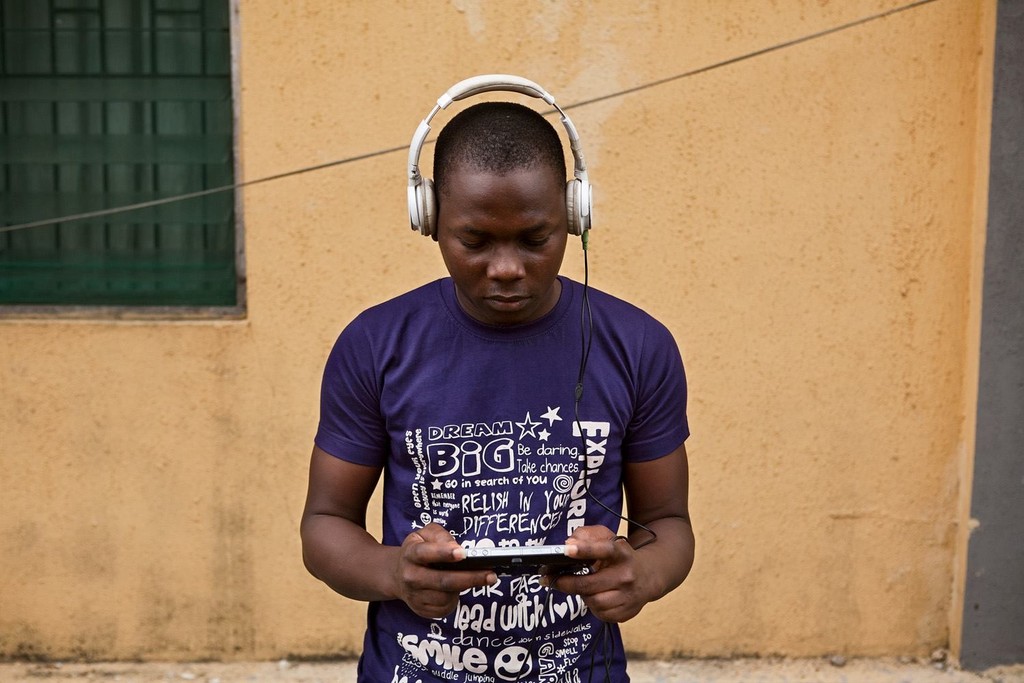
Mobility is the future of video games; the fastest-growing segment of the industry in recent years is mobile video games. Thanks to streaming platforms like Twitch, mobile games are starting to reach impressive audiences right from their launch thanks to multiplayer functions and instant streaming, erasing borders and launch marketing efforts. See mobile spotlight https://www.twitch.tv/year/2015


