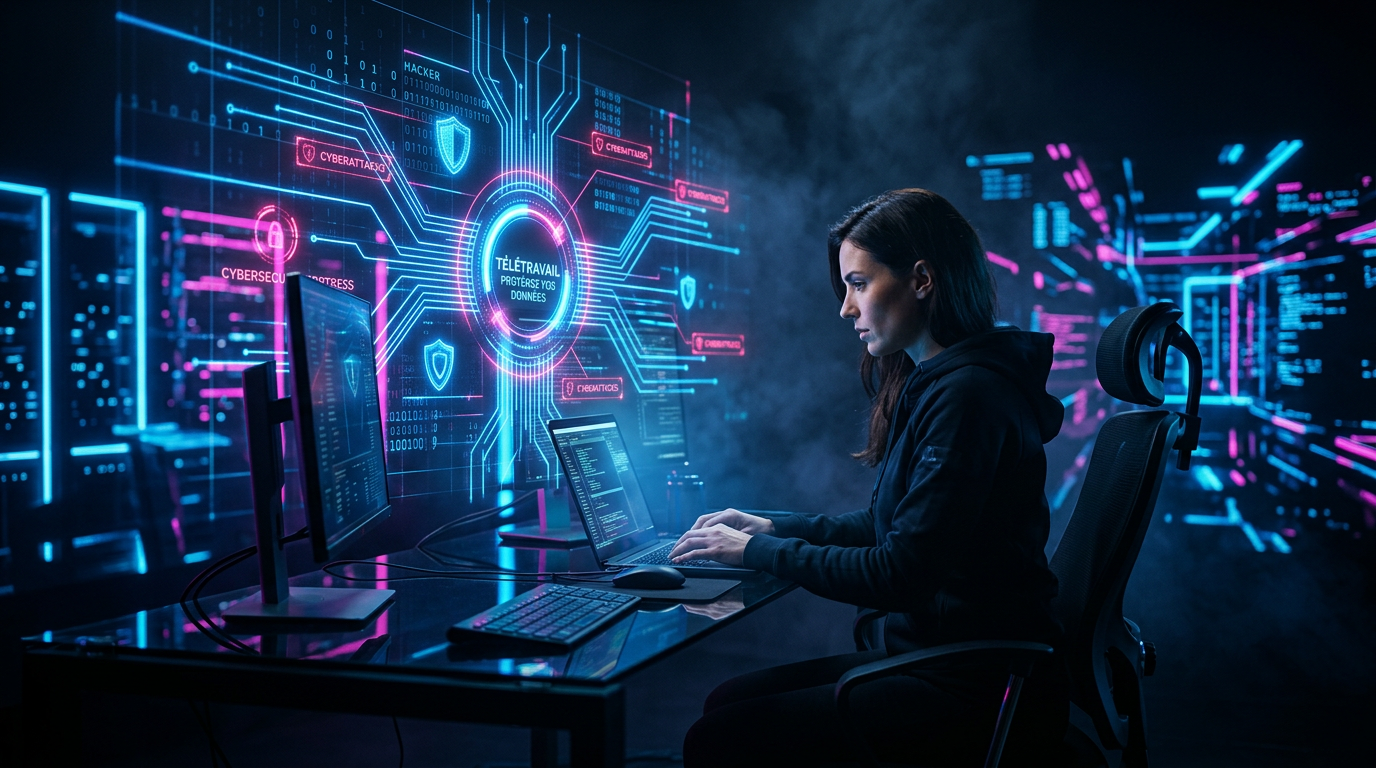
The office is no longer a physical sanctuary. With the widespread adoption of hybrid work, the boundary between private life and professional networks has evaporated, opening a monumental breach for cybercriminals. For French companies, employees’ homes have become the weak link in the security chain. Yet, a few technical and behavioral adjustments are enough to drastically reduce the risks.
The Current State: A Professionalizing Threat
The numbers are clear: according to the latest cybersecurity reports, more than 60% of companies suffered at least one intrusion attempt via remote access over the past year. Hackers no longer target only central servers but seek to enter through the “back door”: your home internet box, your smartphone, or your connected objects.
Phishing remains the fatal weapon, representing nearly 80% of entry vectors. The objective is simple: steal your credentials to infiltrate your employer’s network and inject ransomware, a malicious software that paralyzes activity in exchange for a ransom.
The 5 Pillars of Your Home Security
To transform your living room into a digital fortress, here are the concrete measures to apply immediately:
- Two-Factor Authentication (2FA): This is the absolute foundation. Never settle for a password, no matter how complex it is. Activate validation via an application (like Google Authenticator) or a physical key on every professional service.
- Strict Use of VPN: The Virtual Private Network creates an encrypted tunnel between your computer and the company. It makes your data unreadable to anyone trying to intercept your Wi-Fi connection.
- Separation of Uses: Your professional computer should only be used for work. Lending your laptop to a child for an online game or visiting unsecured streaming sites directly exposes your employer’s confidential files.
- Systematic Updates: Every system or software update notification often fixes a critical security flaw. Never postpone them until tomorrow.
- Secure Your Internet Box: Change your router’s default administrator password and ensure that the Wi-Fi security protocol is at least WPA2 (or WPA3 for recent models).
The Human Factor: Stay Vigilant
Technology cannot do everything. The first firewall is you. Attackers use urgency or fear to make you commit a mistake. An email from management requesting an immediate transfer, or a message from technical support claiming your access codes, must systematically trigger a mental alert.
Expert Advice: If in doubt about a message received on Teams, Slack, or by email, use another communication channel (phone, SMS) to verify the sender’s identity. This double-check reflex saves thousands of companies every year.
What to do in Case of an Incident?
If you suspect an intrusion (abnormally slow computer, missing files, webcam activating on its own), reactivity is key. Immediately disconnect your device from the Wi-Fi network and contact your IT manager. Do not try to solve the problem yourself: you could erase precious traces for the attack analysis.
In 2024, cybersecurity is no longer a technical option; it is a full-fledged professional skill. By adopting these simple gestures, you protect not only your job but also the integrity of your company.