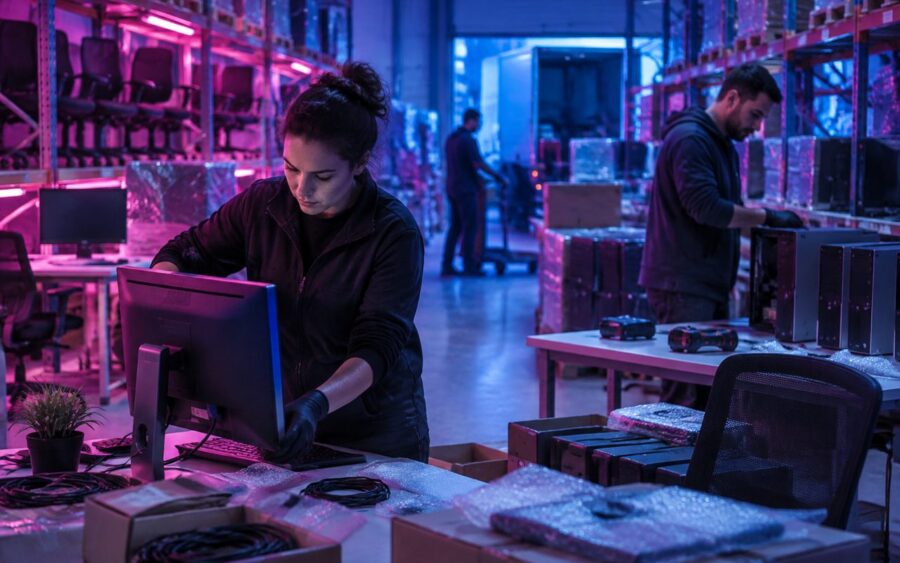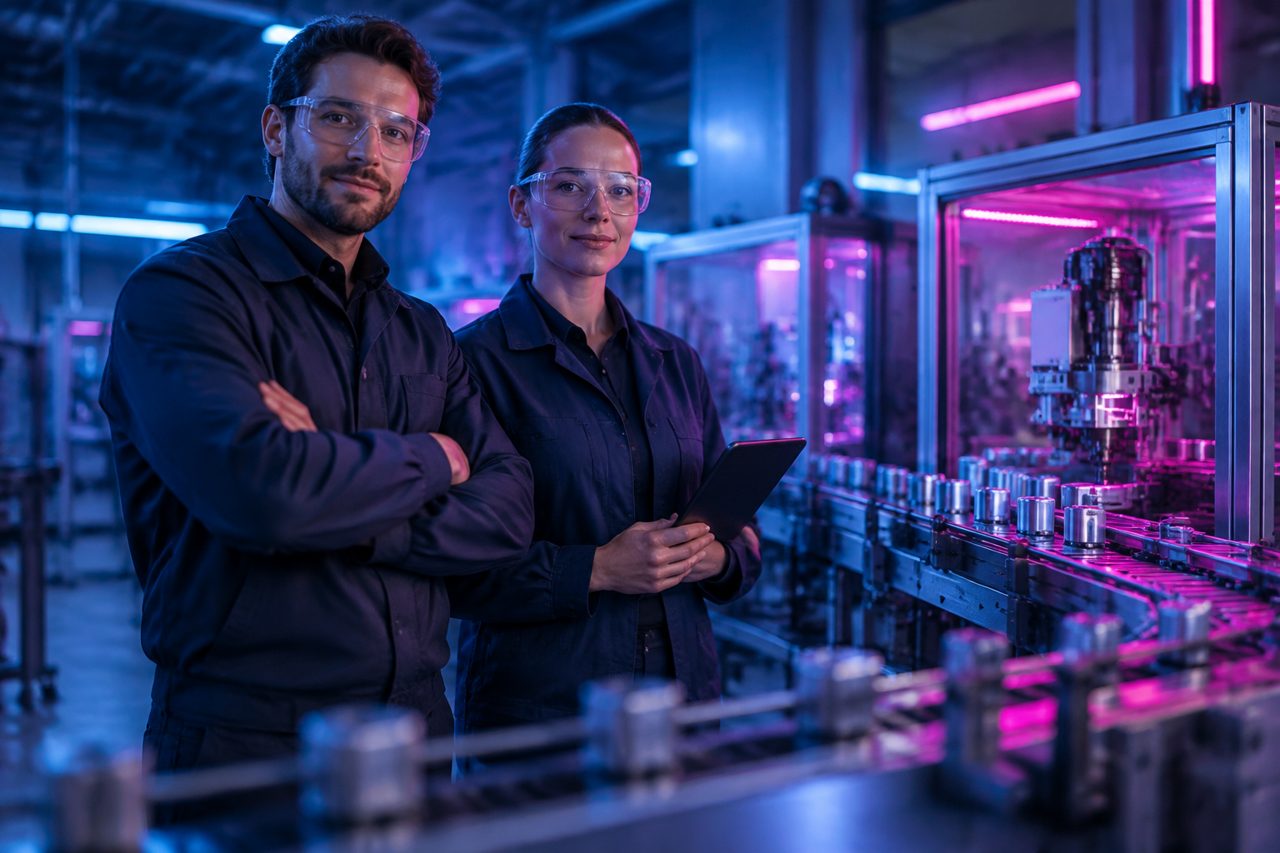
On the lab bench, the material delivers on its promise. In the pilot workshop, the machine works. Then comes the first major order: several thousand identical parts, delivered on a fixed date. That is where a different journey begins. For an industrial start-up, the first factory is not a scaled-up prototype: it means entering a different business. Looking ahead to September 2026, this transition is emerging as a decisive test for young companies seeking to turn a technical innovation into a profitable business.
The prototype proves a possibility; the factory must deliver on a promise
A prototype answers one question: can the desired result be achieved? A factory must answer several at once: at what production rate, with what consistency, at what cost and under what safety conditions? A high-performance battery or a successful bio-based packaging design is not enough. Their characteristics must be reproduced despite variations in raw materials, equipment wear and shift changes.
The trap lies in extrapolating laboratory performance. A chemical reaction controlled in a small vessel can become difficult to cool at scale. An assembly completed by a meticulous engineer may take too long to be profitable. Scaling up sometimes changes the process itself, not just its size. Each modification may require further testing, or even renewed qualification by the customer.
French battery projects have made this complexity visible. Verkor broke ground on its Dunkirk gigafactory in November 2023; ACC inaugurated its Billy-Berclau–Douvrin plant in May of the same year. These documented milestones should not be confused with immediately stable production. The lesson extends beyond the automotive industry: building a facility and mastering its operation are two separate achievements.
Financing machinery, but above all financing time
In software, a new version can often be deployed without major new investment in hardware. In industry, growth frequently requires paying before selling: premises, grid connections, tooling and inspection equipment. Then come inventory and wages, while the first production runs remain imperfect. The true bill therefore includes the initial investment and the cash needed to ramp up production.
This difference challenges the venture capital model. A fund may be able to finance a technological breakthrough without being able to shoulder a factory and its uncertainties alone. The start-up must then put together several sources of funding: equity, public support, loans, leasing, industrial partnerships and, sometimes, customer advances. In France, France 2030 programmes, including the “First Factory” call for projects, have specifically recognised this vulnerable link in the industrialisation process.
But a grant removes neither lead times nor commercial risk. A bank will look for repayment prospects; an investor will examine dilution and future capital requirements. As for the customer, a letter of interest does not necessarily amount to a firm order. The clauses need careful reading: guaranteed or indicative volumes, qualification conditions and cancellation rights. A seemingly reassuring order book can leave the manufacturer bearing considerable risk.
A sound financial scenario must therefore factor in a slower-than-expected start, more scrap and late payments. This is not pessimism: it is a way to prevent a viable technology from failing through lack of cash between production milestones.
Procurement becomes a strategic function
In the laboratory, the best available component is ordered, even if it is expensive. In production, its lead time, traceability, consistency and alternatives must all be understood. An ordinary valve can bring an entire line to a halt. A sole supplier may change a formulation or reserve capacity for a larger customer. The product’s bill of materials becomes a map of the company’s dependencies.
The logistical disruption of the pandemic, followed by energy pressures and geopolitical tensions, exposed the limits of sourcing strategies optimised solely for price. For a new factory, securing a second source seems sensible, but it also comes at a cost: additional tests, new tooling and validation procedures. In some regulated sectors, changing suppliers means reopening part of the qualification file.
The answer, then, is not to duplicate everything. It is to rank the risks: which parts can stop production? Which materials are difficult to replace? What inventory genuinely protects operations? An experienced procurement manager can create more value here than a spectacular discount, by preventing a shortage that would leave machinery and employees idle.
Quality is not just checked at the end of the line
When a small team makes ten units, it can inspect them individually and correct defects by hand. At several thousand units, that approach becomes expensive, sometimes impossible. A process must be designed to produce correctly: defined parameters, calibrated instruments, accessible instructions, organised maintenance and systematic handling of deviations.
Quality is also an information system. Knowing which batch of material was used to manufacture which part makes it possible to contain a problem rather than recall an entire production run. This traceability does not always require sophisticated IT architecture from the outset. It does, however, require reliable data and clear responsibilities. Digitising a confused procedure does not make it robust.
The metrics change too. The prototype’s peak performance gives some ground to material yield, conformance rates, equipment availability and cost per saleable unit. A line that runs quickly while generating large amounts of scrap can erode margins. The dashboard must reveal that trade-off, without concealing difficulties behind gross output figures.
Recruiting a team that knows how to repeat, not just invent
Finally, the first factory reshapes the hierarchy of skills. Researchers and developers are joined by maintenance technicians, production managers, safety specialists, automation engineers and team leaders. Their expertise often rests on incidents they have already experienced: temperature drift, an unstable setting, a recurring breakdown. This practical knowledge can clash with a founding culture accustomed to valuing novelty above all.
Recruitment also takes place beyond the major tech hubs. Transport, shift patterns, training and career prospects become tangible selling points. Building early relationships with vocational schools, training centres and local organisations helps establish a talent pool. Waiting until the machines arrive to look for the people who will operate them risks a costly mismatch in timing.
Above all, management must safeguard dialogue between design teams and the shop floor. If operators silently compensate for a design flaw, the company does not improve. If they can document the problem and secure a correction, the factory becomes a learning tool. This requires accepting a new rule: changing a product in production demands collective discipline, not just a good idea.
What next? For projects approaching this stage in September 2026, the advantage may lie less in the most spectacular factory than in the best-managed path: a suitable pilot, phased spending, engaged customers and protected cash reserves. Outsourcing or a shared production line can sometimes precede a dedicated facility. The outlook remains open, but the criterion is clear: industrialisation means making a promise repeatable without exhausting the company.