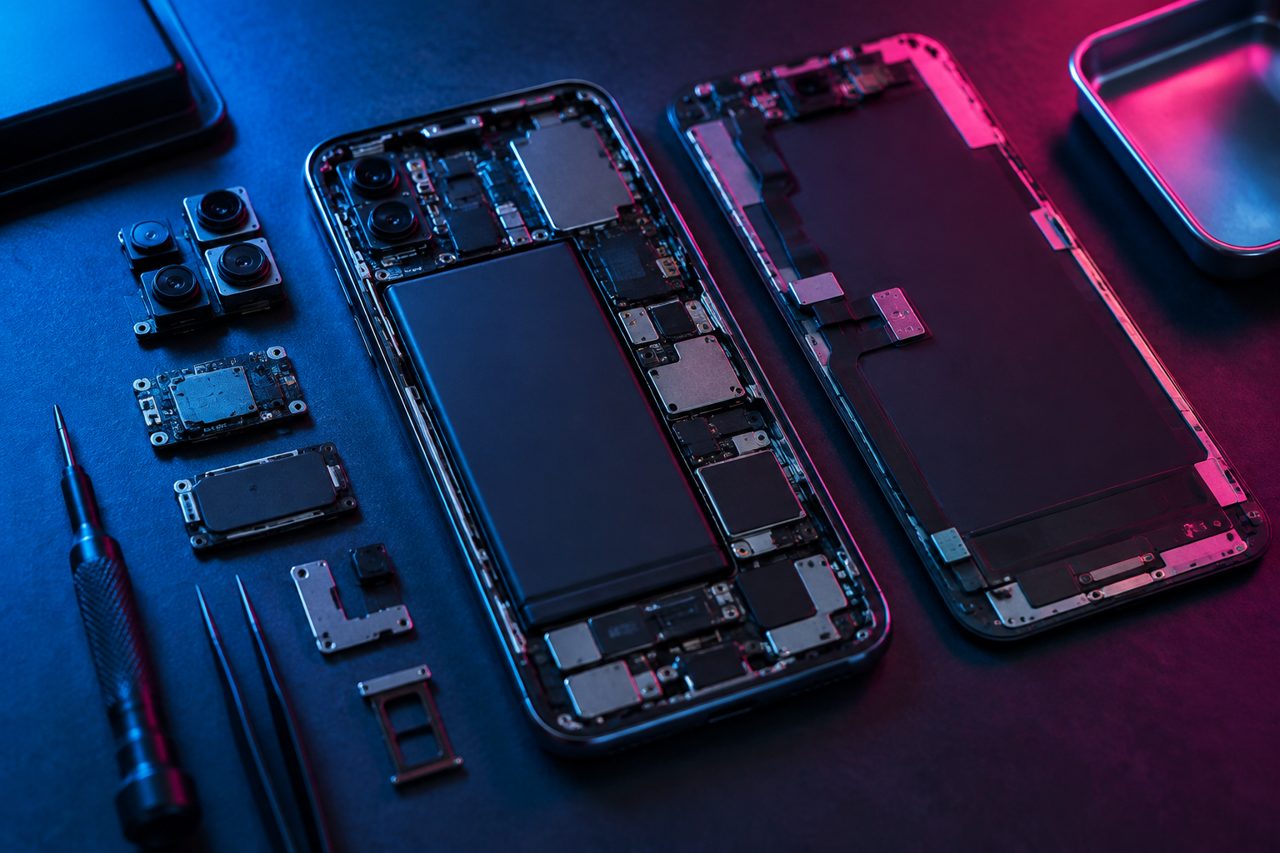
A worn-out battery is easy to spot: by 4 p.m., the phone already needs a power socket. Software support coming to an end is less conspicuous. The device still works and the photos still look good, but patches become less frequent and some apps will eventually leave it behind. For anyone considering a purchase in September 2026, the question therefore goes beyond battery life: how many years will this smartphone actually remain usable? European rules provide new benchmarks. But buyers still need to distinguish between a good rating, a commercial promise and an economically sensible repair.
A label that changes the conversation
Since 20 June 2025, new European ecodesign requirements have applied to smartphones covered by the rules and placed on the EU market. They address durability, batteries, access to certain spare parts and software support, among other things. Energy labelling also applies to the smartphones and slate tablets concerned. Adopted in 2023, these measures shift the debate: durability is no longer just an advertising slogan.
The label shows buyers an energy efficiency class from A to G, alongside battery life per cycle, battery endurance, a repeated-drop resistance class, a repairability class from A to E and a water and dust protection rating. The QR code links to the European EPREL database. A word of caution: the energy class is not an overall longevity score, and battery life measured under a common testing protocol does not precisely replicate a day of browsing, video viewing and tethering.
Nevertheless, this framework makes visible characteristics once buried in technical specifications. It makes comparing two similarly priced devices easier. It does not remove the need for further research: a repairability class alone does not tell buyers how much a screen replacement will cost at their local shop.
The battery: a wear component and the first real test
European requirements stipulate, among other things, that the batteries concerned must retain at least 80% of their original capacity after 800 charging cycles. A cycle means the cumulative use of the equivalent of a full charge, not necessarily a single connection to a charger. This threshold provides a useful baseline, not a promise of identical battery life across all usage patterns.
Heat, charging habits and intensity of use remain decisive factors. A phone used for GPS navigation on a sunlit dashboard does not age like a device used mainly for messaging. Above all, even a good battery eventually wears out. The real question then becomes: can it be replaced without sacrificing the screen, water resistance or the household budget?
One misleading shortcut must be avoided here: the 2025 rules do not mean that every smartphone must have a battery removable by hand. Conditions vary according to the design and applicable requirements. Separately, the European Batteries Regulation introduces removal and replacement obligations from February 2027, with defined exemptions. These two timelines should not be confused.
Spare parts available, but on what terms?
The ecodesign framework requires essential spare parts to remain available for at least seven years after the model is no longer placed on the market. Depending on the part, access is provided to professional repairers or also to end users. Delivery times are regulated, generally ranging from five to ten working days depending on the period. This matters: a part that is theoretically listed but unavailable for months does not save any phone.
Then there is the bill. A screen that is available but too expensive can lead to the same outcome as an unavailable screen: the device is abandoned. The total must include the part, labour, adhesives and, where necessary, calibration procedures. Software pairing procedures can also complicate the work; European rules govern access to the necessary tools in specified circumstances.
With its modular models, Fairphone has shown that a different manufacturing trade-off is possible. Conversely, a highly integrated phone can still be repairable if the documentation, parts and tools are available. Modularity helps; it replaces neither a lasting supply chain nor competent after-sales service. Repairs must be practical, not merely demonstrable in a laboratory.
Software: a second expiry date
A new battery can restore a device’s battery life. It does not fix a system vulnerability. Without support, a phone may continue to work while accumulating risks and gradually losing access to certain services. Banking, workplace and authentication apps make this dependence particularly tangible. However, the end of support does not cause everything to stop working the following day.
The European framework governs the provision of operating system updates for at least five years after the model is no longer placed on the market. Its scope must be read carefully: this rule should not be interpreted as a universal guarantee of five major Android or iOS releases. Security patches, bug-fix updates and new features are not interchangeable.
Commercial commitments sometimes go further. Google announced seven years of updates for the Pixel 8 generation, while Samsung announced seven generations of operating system upgrades and seven years of security updates for the Galaxy S24 series. These announcements illustrate a genuine market shift. They do not guarantee that every future feature, particularly in artificial intelligence, will be available on all the devices concerned.
Compare dates, not just durations
“Seven years of support”: the phrase seems straightforward. But starting when? At launch, at purchase or when sales end? A model bought new long after its release may already be partway through its promised support period. For refurbished devices, this calculation becomes essential: the discount must be weighed against the remaining years of support.
Before buying, four checks make comparisons more reliable:
- The software timeline: look for a support end date and distinguish between security updates and major releases.
- Common repairs: ask for the full cost of battery and screen replacements.
- Access to parts: check who can order them and which tools are needed.
- The ability to age well: examine available storage, performance and the quality of the repair network.
Does the length of support matter as much as the battery? Yes, because they address two different reasons for replacement. But their benefits do not simply add up: an excellent hardware rating does not compensate for abandoned software support. A device’s useful life often depends on its weakest link, as well as the user’s needs.
What next? Looking ahead to September 2026, the most promising development would be for retailers and comparison sites to display repairability, repair costs and support end dates side by side. That convergence has yet to take shape. If it does, the best purchase may no longer be the smartphone that looks most appealing on day one, but the one that remains desirable, secure and financially sensible in its fifth year.