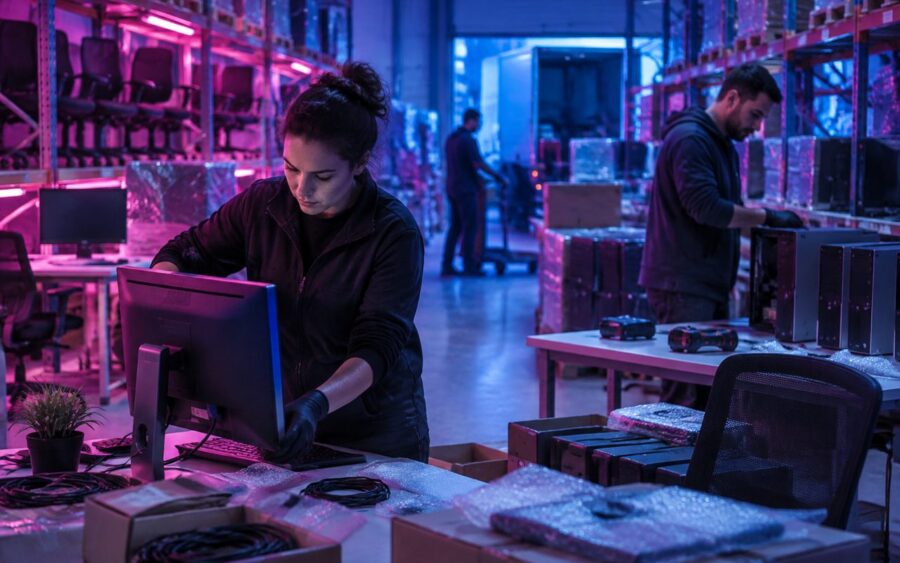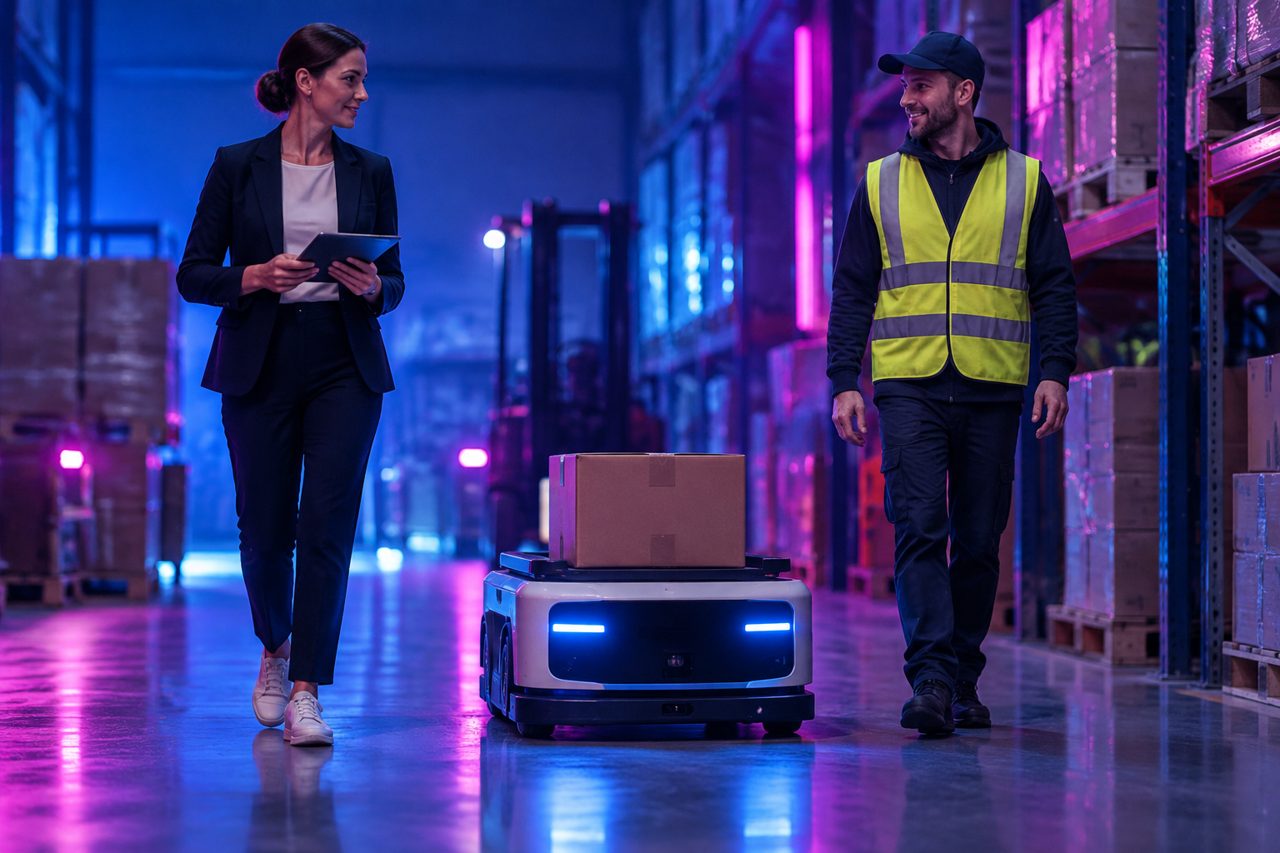
In the warehouse, a robot moves between the shelves. In the workshop, it feeds a machine that no one wants to monitor all day. For the customer, the novelty lies less in these actions than in the bill: a subscription rather than a purchase. Robotics as a service promises to lower the entry cost of automation. Yet it eliminates neither the cost of the hardware nor that of incidents: it shifts them to the provider. In September 2026, its entrepreneurial potential should be examined through this lens: who finances it, who maintains it and who pays when production stops?
A subscription to unlock the decision
The principle of Robotics as a Service, or RaaS, is to provide the use of a robot in exchange for a recurring payment. Depending on the contract, this includes hardware, software, monitoring and maintenance. Installation, training or certain repairs may still be billed separately. The same label therefore covers very different offerings, from conventional rentals to a full service backed by availability commitments.
This approach addresses a practical hesitation. A business owner may identify a strenuous, repetitive task that is difficult to staff without wanting to tie up a substantial sum in an unfamiliar technology. A subscription makes spending more predictable and can facilitate an initial trial. It does not, however, automatically guarantee off-balance-sheet accounting treatment: that depends on the contract and the applicable rules.
In logistics, seasonal fluctuations strengthen the model’s appeal. An adjustable fleet seems better suited to demand peaks than equipment sized for a few exceptionally busy weeks. But the provider must actually have additional machines available and be able to deploy them quickly. Commercial flexibility has value only if it also exists on the ground.
An established trend, not a 2026 invention
Well before 2026, autonomous mobile robots had found their place in some warehouses. Locus Robotics made the service model a commercial focus, and DHL Supply Chain announced an expansion of its partnership with the company in 2023. These deployments demonstrate real adoption without proving that every warehouse can achieve the same results.
In industry, US-based Formic has also developed a subscription-based automation offering. What these approaches have in common is not a universal machine: it is the ambition to sell operational capacity rather than standalone equipment. For a French startup, the lesson is less about copying a catalogue than choosing a problem repetitive enough to solve at scale.
The outlook for September 2026 must remain cautious: these precedents make wider adoption of the model plausible, but do not establish that it will become universal. Structured tasks—transporting bins, palletising, feeding machines—offer more credible ground than the promise of a robot capable of doing everything, everywhere.
The real product is a task performed reliably
Consider a workshop looking to automate the loading of a machine tool. The robotic arm is only part of the project. Parts must be presented correctly, a gripper selected, manufacturing variations managed, controls interfaced and the cell made safe. If every new customer requires a complete rebuild, the provider is not selling a standardised service: it is financing bespoke engineering projects.
Profitability therefore starts with a narrow scope. It is better to master a few families of parts and machines than to promise universal compatibility. In a warehouse, the same logic requires checking floors, traffic routes, network coverage and data exchanges with the management software. A robot that performs well in a demonstration can become an obstacle in a poorly prepared environment.
The pilot must measure the entire process: effective throughput, human interventions, errors, recovery times and effects on neighbouring workstations. Moving more bins achieves nothing if their destination is already at capacity. The right metric is not the number of robots installed, but the operational improvement actually delivered.
The provider also becomes a financier
For the customer, the initial investment falls. For the entrepreneur, it comes immediately: buying or manufacturing the robot, paying for its integration, transporting it and building a spare-parts inventory. Revenue, meanwhile, arrives over time. Rapid sales growth can therefore trigger a cash-flow crisis, even when each contract appears profitable over its lifetime.
The economics must account for the cost of capital, insurance, technicians’ travel, updates and periods without a customer. The machine’s value after its first contract must also be estimated. A robot that can be reconfigured and redeployed offers the provider better protection than a cell too specialised to find a second user.
Financial partners can hold some of the assets. But this solution requires identifiable equipment, robust contracts and a clear allocation of risk. It does not magically turn a hardware business into a high-margin software operation. Before accelerating sales, entrepreneurs must know how many months of payments it actually takes to cover each deployment.
Breakdowns become a contractual issue
A rental agreement with maintenance included is reassuring because it provides a single point of contact. What that provider promises still needs to be specified. Remote support is not the same as an on-site intervention; an intervention does not guarantee a return to production. Commitments must distinguish between covered hours, response times, available parts and fallback solutions.
- Define availability: over which periods is it measured, and with what exclusions?
- Assign responsibilities: who handles a network incident, a collision or a part change?
- Plan for continuity: manual operation, replacement equipment or a recovery procedure.
- Set exit terms: removal of the robot, return of data and any fees.
Outcome-based billing sounds appealing, but it makes measurement more difficult. If the provider is paid per pallet moved, who bears the cost when there are no pallets to transport? A fixed fee combined with a variable component may distribute risk more effectively, provided the data can be verified. Safety, however, must never become something to compromise in order to maintain throughput.
Building a field-based business
Competitive advantage also takes shape far from demonstrations: remote diagnostics, preventive maintenance, operator training and rapid access to supplies. A dense regional presence can be more profitable than premature nationwide coverage. Every trip avoided and every breakdown resolved quickly improves both the customer experience and the economics of the contract.
What next? Looking ahead to September 2026, the most credible opportunity would be to sell automation that is limited in scope, measurable and repairable, then gradually expand its remit. Renting can open doors that purchasing leaves closed, particularly among smaller businesses. But the winners will not necessarily be those that install the most robots: they will be those that can finance their fleets and consistently deliver on their service promise.