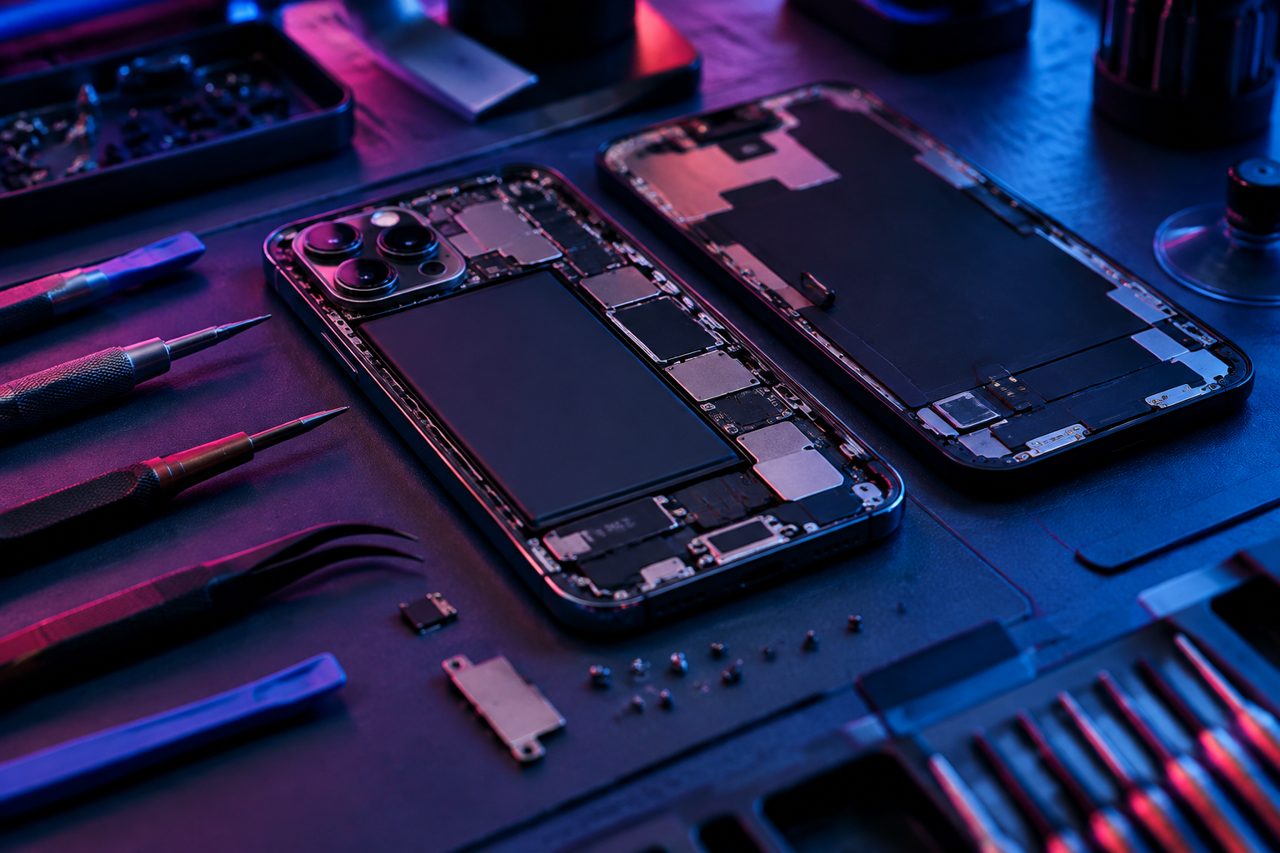
A cracked screen, a fading battery, a repair quote that makes buying new seem preferable: the end of a smartphone’s life often comes down to a choice made under pressure. Since 20 June 2025, new European rules have sought to change that dynamic. Battery life, durability, spare parts and software support are no longer simply marketing promises. Now, in September 2026, the challenge is to measure these obligations against real-world repair conditions, without mistaking regulatory progress for a victory already secured.
Two regulations to move beyond throwaway devices
The change rests on two European regulations adopted in 2023 and applicable since June 2025: one sets ecodesign requirements, while the other introduces energy labelling for the smartphones and slate tablets covered. The first establishes a mandatory baseline for devices placed on the market; the second helps buyers compare models before purchasing.
This distinction matters. A compliant phone meets a regulatory minimum, but it is not necessarily easy or economical to repair. The label, meanwhile, highlights differences between products that all meet the requirements. The law sets the floor; comparisons should reveal the top performers.
Timing matters: the purchase date alone does not determine which rules apply. A device from stock already placed on the market before the deadline may fall under the old rules. These obligations therefore do not retroactively transform every phone still sitting in drawers or shop windows.
A label that finally addresses lifespan
For the models covered, the European label goes beyond an energy efficiency class ranging from A to G. It also shows battery life per charge, battery endurance in cycles, a repeated-drop resistance class, protection against water and dust, and a repairability class from A to E. A QR code links to information registered in the European EPREL database.
For buyers, this represents a shift in perspective. Alongside storage, camera zoom and artificial intelligence features, there are now criteria directly linked to years of use. A phone that looks slightly less appealing in its marketing specifications may become more attractive if it combines long battery life with less complex repairs.
These results still come from standardised testing protocols. Advertised battery life does not precisely replicate a day of GPS navigation, video and tethering. Nor does good drop resistance guarantee survival on every pavement. The label provides a common language, not insurance against breakage.
Batteries, parts and software: what becomes mandatory
A battery designed to last longer
Among the headline requirements, batteries must withstand at least 800 charge and discharge cycles while retaining at least 80% of their original capacity under the specified test conditions. This threshold tackles the wear that can make a device frustrating to use even when it still performs well otherwise.
It does not mean a battery will remain unchanged for a guaranteed number of years. Heat, charging habits and intensity of use still have an impact. Above all, a durable battery and a replaceable battery address two different questions. The June 2025 rules do not mean that every smartphone must return to having a removable back cover.
Parts available after a model leaves the market
The framework requires certain essential parts to remain available for at least seven years after the model is no longer placed on the market. It also sets delivery deadlines, generally between five and ten working days depending on the period concerned. The list of parts and the conditions of access vary for end users and professional repairers.
Screens, batteries, connectors: the aim is to prevent a localised fault from condemning the entire device. Repair information must also be accessible under the conditions laid down in the regulations. But professional access may require supporting documentation; consumers should not expect every parts catalogue to be equally open to everyone.
Software support matters as much as the screwdriver
The requirements also govern the availability of operating system updates, covering a period of at least five years after the model is no longer placed on the market. Their scope must be distinguished from a commercial promise to deliver every new major version or every new feature.
This is essential: keeping a device physically intact is not enough if its apps become incompatible or its security deteriorates. Its useful lifespan depends as much on software as on the repair workshop.
The real test: how much does a repair cost?
Imagine a worn-out battery in a mid-range smartphone. The part is available, and so is the documentation, but the repair quote amounts to a substantial share of the price of an equivalent new device. The consumer may still decide against it. Mandatory availability does not guarantee an attractive price.
Buyers therefore need to consider the full cost: parts, labour, any shipping charges, time without the device and procedures required after replacement. A screen sold only as part of a larger assembly can push up the bill. Lengthy or delicate disassembly increases billable time, even when the repair is technically possible.
Another sensitive issue is software-based component pairing. Some repairs require calibration or a tool to restore full functionality. European rules govern access to the necessary resources in the cases specified. The practical test remains simple: can an independent professional complete the repair properly without disproportionate reliance on the brand’s service network?
Compare practices, not just ratings
Before buying, a few checks are worth more than a slogan about durability:
- Compare the label and EPREL information sheet for the exact model.
- Check screen and battery replacement prices.
- Check repair options outside the authorised service network.
- Read the software support commitments, noting when they begin and their limitations.
- Examine warranty terms after a repair and the arrangements for restoring water resistance.
Manufacturers have several ways to set themselves apart: modular design, cheaper parts, simpler procedures or extended software support. Conversely, bare-minimum compliance coupled with prohibitive prices could limit the benefits of the framework. This contrast provides a framework for forward-looking analysis, not an established ranking of brands as of September 2026.
The right to repair broadens the agenda
These regulations should not be confused with the European right-to-repair directive adopted in 2024. For the products covered, it provides, among other things, for repair obligations and measures encouraging repairs. Its transposition deadline was 31 July 2026; practical implementation must be checked in each country.
What next? Decisive progress could come from the combination of labelling, competition and effective enforcement. If buyers compare repair quotes as closely as performance, manufacturers will have a stronger incentive to design devices that can genuinely be maintained. Europe’s promise will be fully delivered only when an ordinary fault leads to a simple, affordable and lasting repair, rather than an almost automatic trip to the checkout.