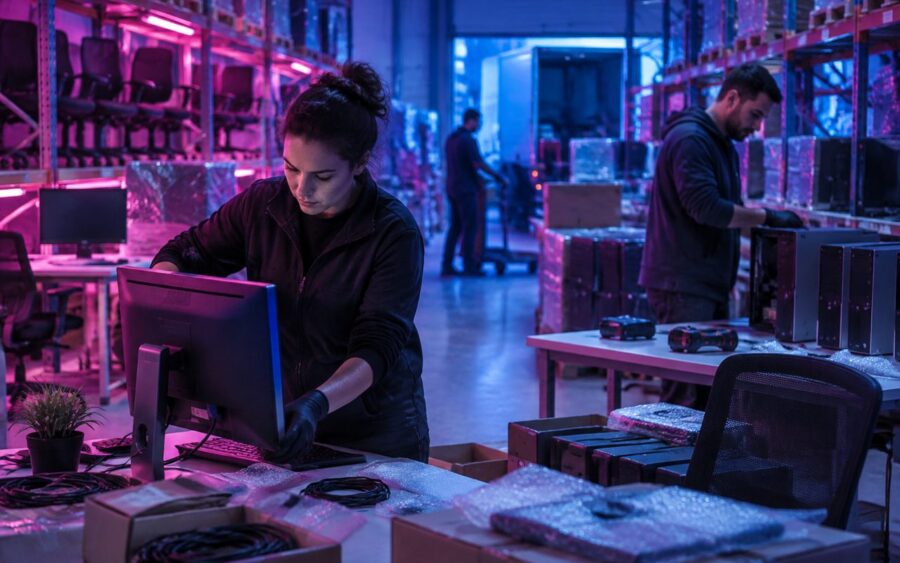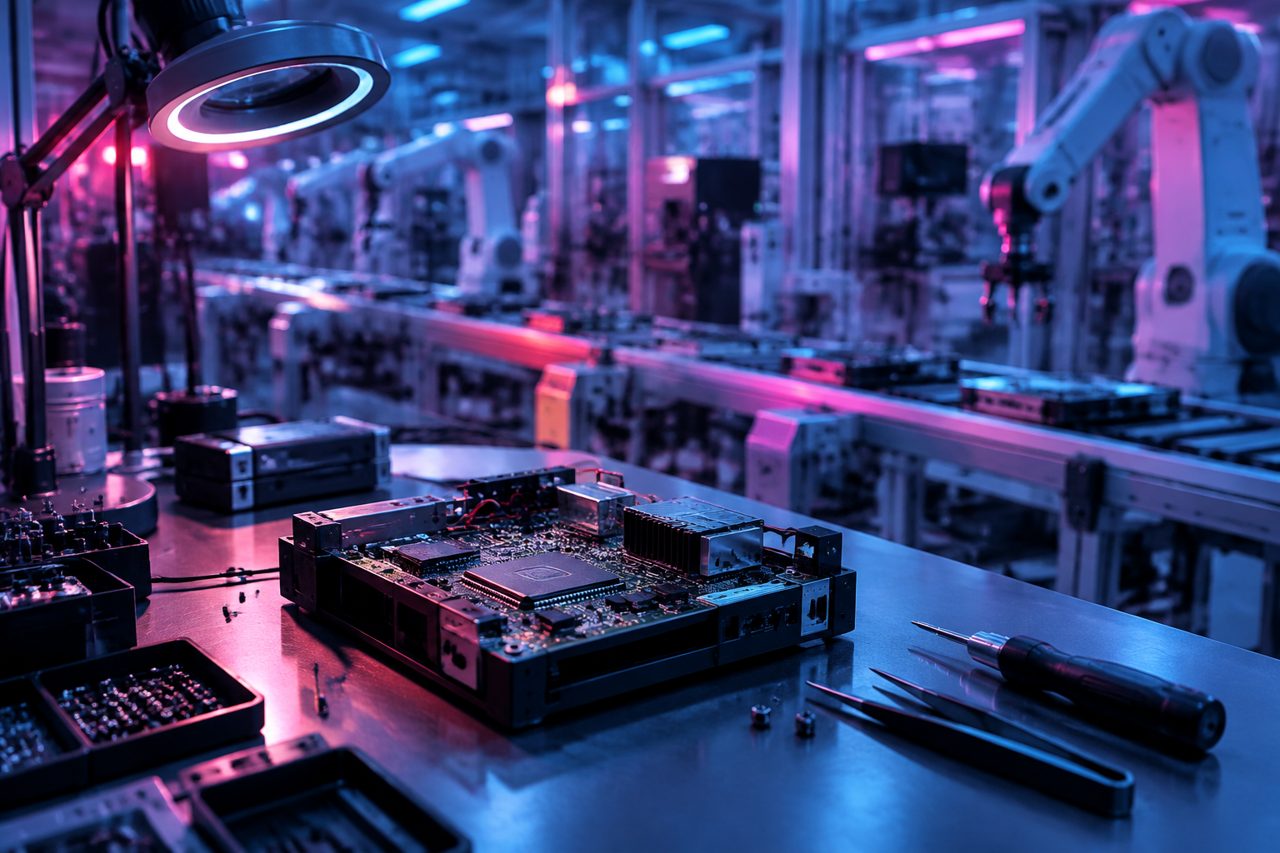
At a CES booth, everything seems simple: the sensor responds, the robot moves, the app displays the right information. Behind the table, however, someone knows which cable not to touch and when to recharge the battery. For the entrepreneur, the applause marks the start of the most dangerous stage: turning one convincing unit into thousands of reliable products. The prototype proves a possibility; the factory demands repeatability. Looking ahead to September 2026, that gap remains a central challenge for hardware startups. This analysis draws on established precedents and industrial perspectives, without anticipating announcements this fall.
The Trade Show Validates Interest, Not the Economics
CES in Las Vegas is a powerful catalyst for connections, bringing together distributors, investors, suppliers and early customers. But a demonstration primarily answers one question: “Is it desirable?” It settles neither the actual manufacturing cost, nor the product’s lifespan, nor the ability to deliver at the advertised price.
The history of hardware offers cautionary tales. Anki, known for its consumer robots Cozmo and Vector, ceased operations in 2019 despite its visibility and funding. Pebble, a smartwatch pioneer and crowdfunding star, sold certain assets to Fitbit in 2016. Production alone does not explain these outcomes. They nevertheless serve as a reminder that a popular device does not guarantee a sustainable business.
The trap begins when the delivery date becomes a marketing tool before it is a technical conclusion. A preorder helps gauge market appetite; it also creates an obligation to the customer. If the price is based on an incomplete quote, every additional sale can widen the funding shortfall.
From Prototype to Stable Manufacturing Specifications
The first unit enjoys special treatment: a 3D-printed enclosure, overengineered components, an engineer adjusting the assembly. In mass production, these accommodations become costs. The product must therefore be redesigned for manufacturing and assembly: reducing the number of parts, simplifying connections, controlling tolerances and planning tests.
Well-organized teams generally work through successive validation stages, often called EVT, DVT and PVT: engineering, design and then production. The names vary, but the logic remains the same. First, verify that the technology works; next, that the final product withstands use; and finally, that the production line can manufacture it consistently.
The Mechanical Detail That Eats Into Margins
Imagine a sensor designed to monitor a machine. Its enclosure closes perfectly by hand. In an initial production run, variations in molding can make some clips too stiff and others too loose. The operator applies force, slows down or breaks a part. This is no longer a cosmetic defect: it means scrap, labor and sometimes tooling rework.
A design suitable for manufacturing must also be testable. How can radio performance, power consumption or watertightness be checked quickly? Without a suitable test rig, the factory risks letting defects slip through or spending too much time on each unit. This item deserves a budget as clearly defined as the one for the mold.
Certification Planning Starts Before the Design Freeze
Compliance is not a stamp purchased at the end. In Europe, CE marking makes the manufacturer responsible for compliance with applicable legislation. Depending on the product, this may cover electromagnetic compatibility, electrical safety, radio equipment or certain substances. Whether a third-party body must be involved depends on the relevant regulatory framework; it is not always required.
Requirements also differ across markets. In the United States, a radio device must, among other things, meet the relevant FCC requirements. A lithium battery adds transport requirements, including UN 38.3 testing. A device intended for healthcare, use as a toy or a particular industrial environment may be subject to additional obligations.
Waiting until the last moment risks triggering a chain reaction. Electromagnetic interference may require shielding, which changes space requirements, heat dissipation and assembly. Preliminary tests on a representative design reduce this risk. And a late change to an antenna, power supply or material may require a fresh assessment of compliance that the team thought was already secured.
The Supplier Sells Capacity, Not a Guarantee
Finding a contract manufacturer does not mean transferring every difficulty to it. It manufactures according to specifications and contractual commitments. If acceptance criteria remain vague, disagreements surface during quality control: what kind of scratch is acceptable? What measurement drift triggers a rejection? Who pays for rework?
The startup must clarify mold ownership, access to manufacturing files, traceability and change management. Replacing a component with a supposed equivalent can alter the product’s actual behavior. The manufacturing relationship therefore rests on shared documentation, not simply a good business rapport.
The semiconductor shortages of the early 2020s exposed the fragility of supply chains. Planning for a second source remains desirable, but it is rarely an immediate solution: a replacement may require a new circuit or additional software. Effective preparation means identifying critical parts before they bring all production to a halt.
The First Production Run Is Above All a Cash-Flow Test
An assembly quote does not tell you how much a delivered product costs. Tooling, testing, packaging, shipping, any customs duties, scrap and returns must be added. Then come trade discounts and after-sales support. For a connected device, hosting and software maintenance often continue after payment has been received.
Payment schedules complicate the equation further. Suppliers may demand deposits while distributors pay later. In between, cash is tied up in components, goods in transit and inventory. A positive margin on paper does not prevent a cash-flow crisis.
The pilot run is designed precisely to replace assumptions with observations. How many units pass testing on the first attempt? How many minutes does assembly take? Which defects recur? Immediately ordering a large volume to reduce the unit price can be a false economy if the process has not been stabilized.
Delivery Is Not the End of the Job
Once the product reaches the customer, real-world use begins: unstable networks, heat, drops, incorrect installation. The entrepreneur must have planned for diagnostics, replacement parts and returns handling. Connected devices also require secure updates and a credible support period.
Advances in design tools and artificial intelligence assistance could accelerate certain engineering tasks. But that potential gain eliminates neither physical testing nor the manufacturer’s responsibility. Reducing the time needed to design a part does not prove that it will age well.
What Next? Looking ahead to September 2026, the strongest path may be one of better-sequenced ambitions: a priority use case, a limited production run, explicit validation criteria and then a production ramp-up. The advantage will not necessarily go to the most spectacular booth, but to the team capable of refusing a premature delivery. In hardware, keeping a promise often starts with knowing when to delay announcing it.